



Cirrhinus microlepis Sauvage, 1878
Small scale mud carp
Uploaden van uw Foto's en video's
Afbeeldingen | Google afbeelding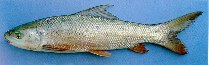 Cirrhinus microlepis
Afbeelding van Roberts, T.R.
Afbeeldingen | Google afbeelding
Afbeelding van Roberts, T.R.
Classificatie / Namen Lokale namen | Synoniemen | Catalog of Fishes(Genus, Soort(en)) | ITIS | CoL | WoRMS | Cloffa
> Cypriniformes (Carps) > Cyprinidae (Minnows or carps) > Labeoninae
Etymology: Cirrhinus: Latin, cirrus = curl fringe (Ref. 45335).
More on author: Sauvage.
Etymology: Cirrhinus: Latin, cirrus = curl fringe (Ref. 45335).
More on author: Sauvage.
Milieu: milieu / Klimaatzone / Diepte / verspreidingsgebied Ecologie
; zoet water benthopelagisch; potamodroom (Ref. 51243). Tropical; 19°N - 9°N, 101°E - 108°E
Verspreiding Gebieden | FAO regio's | Ecosystemen | Voorkomen | Verspreidingskaart | Introducties | Faunafri
Asia: Chao Phraya and Mekong basins in Thailand, Laos, Cambodia and Viet Nam.
Grootte / Gewicht / Leeftijd
Maturiteit: Lm ? range ? - ? cm
Max length : 65.0 cm SL mannelijk / geslacht onbekend; (Ref. 30857); max. gepubliceerd gewicht: 5.0 kg (Ref. 10431)
Max length : 65.0 cm SL mannelijk / geslacht onbekend; (Ref. 30857); max. gepubliceerd gewicht: 5.0 kg (Ref. 10431)
Korte beschrijving Determinatiesleutels | Morfologie | Morfometrie
Dorsale stekels (totaal) : 0; Dorsale zachte stralen (totaal) : 15 - 16; Wervels: 40. Distinguished from other species of the genus in the area by its count of lateral line scales: 53-60 (Ref. 27732). A large species with very small scales, no barbels, and distinctive coloration. Juveniles silvery with red caudal fin, larger fish with head and body violaceous, rosy, or bluish and caudal fin dusky (Ref. 33488)
Body shape (shape guide): fusiform / normal.
Body shape (shape guide): fusiform / normal.
Inhabits large rivers and lowland floodplains (Ref. 12693). Occurs in riffle and deep slow reaches (Ref. 37769). Moves out into the flooded forest where it feeds on leafy plant matter, phytoplankton and insects (Ref. 12693). Migration pattern is markedly different above and below the Khone Falls in the Mekong basin. Below the falls, it makes an upstream migration from Phnom Penh to the Khone Falls between November and February, consisting mainly of sub-adults of sizes 10 to 50 cm. From April to July, it migrates in the opposite direction, from Khone Falls and downstream, constituting mainly of sub-adults up to about 50 cm (Ref. 37770). Above the Khone Falls, from Klong Kaem District, Ubolratchatani in Thailand, fish migrates upstream in February; at Khemmaratch further upstream in Ubolratchatani, it moves upstream in March-April; and at Mukdahan, it goes upstream in May. However, it migrates downstream at Klong Kaem in June-July (Ref. 37770). Only downstream migrations are reported in the Mekong Delta in Viet Nam, constituting mainly of juveniles (2-20 cm), with the smallest fish mainly in June-July and fish between 10 and 20 mainly from September to November (Ref. 37770). From Xayabouri in Laos to Chiang Saen in Thailand, upstream migrations take place from March to August. This appears to be two distinct migrations: one of sub-adults measuring 15-50 cm during March-April and another one of larger fishes of sizes 40 to 90 cm during June-July (Ref. 37770). Not known to persist in impoundments. Individuals caught with dais or traps are often immediately kept alive in fish cages for future sale. Marketed fresh and sometimes dried and salted (Ref. 12693). Known to reach up to 15 kg in Thailand (Jean-Francois, pers. comm. 11/02).
Levenscyclus en paargedrag Maturiteit | Voortplanting | Paaien | Eieren | Fecunditeit | Larven
Reproductive behavior assumed only. Replace ASAP (RF).
Hoofdreferentie
Upload uw referenties | Referenties | Coördinator | Medewerkers
Roberts, T.R., 1997. Systematic revision of the tropical Asian labeon cyprinid fish genus Cirrhinus, with descriptions of new species and biological observations on C. lobatus. Nat. Hist. Bull. Siam Soc. 45:171-203. (Ref. 33488)
Status op de Rode Lijst van het IUCN (Ref. 130435: Version 2025-2 (Global))
Kwetsbaar (VU) (A2ade); Date assessed: 17 February 2011
CITES
Not Evaluated
Gevaar voor de mens
Harmless
Gebruik door de mens
Visserij: commercieel
FAO - Aquacultuursystemen: productie; ; Publication: search | FishSource |
Meer informatie
Trofische ecologie
Voedsel (prooien)
Dieetsamenstelling
Voedselconsumptie
Voedselrantsoenen
Predatoren
Voedsel (prooien)
Dieetsamenstelling
Voedselconsumptie
Voedselrantsoenen
Predatoren
Populatiedynamica
Groeiparameters
Max. leeftijden / maten
Lengte-gewicht rel.
Lengte-lengte rel.
Lengtefrequenties
Massaconversie
Rekrutering
Abundantie
Groeiparameters
Max. leeftijden / maten
Lengte-gewicht rel.
Lengte-lengte rel.
Lengtefrequenties
Massaconversie
Rekrutering
Abundantie
Levenscyclus
Voortplanting
Maturiteit
Rijpheid/kieuwen rel.
Fecunditeit
Paaien
Paaibestanden
Eieren
Ontwikkeling van de eieren
Larven
Larvale populatiedynamiek
Voortplanting
Maturiteit
Rijpheid/kieuwen rel.
Fecunditeit
Paaien
Paaibestanden
Eieren
Ontwikkeling van de eieren
Larven
Larvale populatiedynamiek
Anatomie
Kieuwoppervlak
Hersenen
Otoliet
Kieuwoppervlak
Hersenen
Otoliet
Fysiologie
Lichaamssamenstelling
Voedingsstoffen
Zuurstofverbruik
Type zwemmen
Zwemsnelheid
Visuele pigmenten
Vis geluid
Ziekten en parasieten
Toxiciteit (LC50)
Lichaamssamenstelling
Voedingsstoffen
Zuurstofverbruik
Type zwemmen
Zwemsnelheid
Visuele pigmenten
Vis geluid
Ziekten en parasieten
Toxiciteit (LC50)
Genetica
genoom
Genetica
Heterozygositeit
Erfelijkheid
Genetische diversiteit
genoom
Genetica
Heterozygositeit
Erfelijkheid
Genetische diversiteit
Menselijk gerelateerd
Aquacultuursystemen
Aquacultuurprofielen
Kweeklijnen
Ciguatera gevallen
Postzegels, munten, diversen.
Aquacultuursystemen
Aquacultuurprofielen
Kweeklijnen
Ciguatera gevallen
Postzegels, munten, diversen.
Tools
E-boek | Veldgids | Determinatiesleutels | Lengtefrequentie Tool | Levenscyclus tool | Verspreidingskaart |
Vangst-MSY |
Speciale rapporten
Bekijk gegevens voor het houden in een aquarium | Bekijk Fact Sheets voor de soort | Bekijk Aquacultuur Fact Sheets
Download XML
Internetbronnen
AFORO (otoliths) | Aquatic Commons | BHL | Cloffa | Websites from users | Bekijk FishWatcher | CISTI | Catalog of Fishes: Genus, Soort(en) | DiscoverLife | ECOTOX | FAO - Aquacultuursystemen: productie; ; Publication: search | Faunafri | Fishipedia | Fishtrace | GloBI | Google Books | Google Scholar | Google | IGFA World Record | OneZoom | Open Tree of Life | Otolith Atlas of Taiwan Fishes | PubMed | Reef Life Survey | Socotra Atlas | TreeBase | Tree of Life | Wikipedia: ga naar, zoek | World Records Freshwater Fishing | Zoological Record
Schattingen op basis van modellen
Fylogenetische diversiteitsindex (Ref. 82804): PD50 = 0.5020 [Uniqueness, from 0.5 = low to 2.0 = high].
Bayesian length-weight: a=0.00794 (0.00436 - 0.01448), b=3.00 (2.85 - 3.15), in cm total length, based on LWR estimates for this species & (Sub)family-body (Ref. 93245).
Trofisch niveau (Ref. 69278): 2.4 ±0.21 se; based on food items.
Weerstandsvermogen (Ref. 120179): Gemiddeld, minimale populatieverdubbelingstijd 1,4-4,4 jaar (Assuming tm=2-4).