



アップロード 写真 そして ビデオ
画像 | グーグルの画像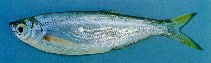 Paralaubuca typus
画像によって Roberts, T.R.
画像 | グーグルの画像
画像によって Roberts, T.R.
分類 / 名前 共通名の | 類義語 | Catalog of Fishes(部類, 種) | ITIS | CoL | WoRMS | Cloffa
環境:環境 / 気候帯 / 深さの範囲 / 分布範囲 生態学
; 新鮮な水 底生の漂泳性; potamodromous (Ref. 138296). Tropical
分布 領土 | 国連食糧農業機関の区域 | エコシステム | 事件 | 目的のマップ | 導入 | Faunafri
サイズ / 重さ / 年齢
成熟: Lm ? range ? - ? cm
Max length : 18.0 cm SL オス/雌雄の選別がない; (Ref. 30857); 最大記録サイズ: 8 年 (Ref. 138296)
Max length : 18.0 cm SL オス/雌雄の選別がない; (Ref. 30857); 最大記録サイズ: 8 年 (Ref. 138296)
簡単な記述 検索表 | 形態学 | 形態計測学
Has 33-42 gill rakers on the first gill arch (Ref. 12693); 56-64 lateral line scales; the lateral line usually discontinuous; the dorsal profile almost arched as the ventral profile (Ref. 27732).
Body shape (shape guide): elongated.
Body shape (shape guide): elongated.
Adults occur in shallow depths of large rivers (Ref. 12693). Found in slow flowing large rivers (Ref. 43281). They form schools; often harvested in large numbers throughout its range. Food consists of zooplankton and occasionally on insects. They migrate into flooded forests when water level is high and returns to the mainstream after the water level declines considerably (Ref. 12693). Spawning occurs at the onset of the flood season (May to July) and the eggs and larvae are swept downstream and out onto the flooded areas (Ref. 37770). Sometimes marketed fresh, but often used to make prahoc (Ref. 12693).
ライフサイクルと交尾行動 成熟 | 繁殖 | 放精 | 卵 | 生産力 | 幼生
主な参考文献
参考文献のアップロード | 参考文献 | コーディネーター | 協力者
Rainboth, W.J., 1996. Fishes of the Cambodian Mekong. FAO species identification field guide for fishery purposes. FAO, Rome, 265 p. (Ref. 12693)
CITES
Not Evaluated
人間に対する脅威
Harmless
人間の用途
水産業: 少数商業の
FAO - Publication: search | FishSource |
より多くの情報
解剖学
カマ
脳
オトリス
カマ
脳
オトリス
生理学
体組成
栄養素
酸素消費
水泳タイプ
泳ぐ速さ
視覚色素
フィッシュ・サウンド
病気と寄生虫
毒性(LC50)
体組成
栄養素
酸素消費
水泳タイプ
泳ぐ速さ
視覚色素
フィッシュ・サウンド
病気と寄生虫
毒性(LC50)
遺伝子の
ゲノム
遺伝子の
ヘテロ接合性
遺伝
遺伝的多様性
ゲノム
遺伝子の
ヘテロ接合性
遺伝
遺伝的多様性
用具
特記事項
XMLをダウンロードして下さい
インターネットの情報源
AFORO (otoliths) | Aquatic Commons | BHL | Cloffa | Websites from users | Check FishWatcher | CISTI | Catalog of Fishes: 部類, 種 | DiscoverLife | ECOTOX | FAO - Publication: search | Faunafri | Fishipedia | Fishtrace | GloBI | Google Books | Google Scholar | Google | IGFA World Record | OneZoom | Open Tree of Life | Otolith Atlas of Taiwan Fishes | PubMed | Reef Life Survey | Socotra Atlas | TreeBase | 生命の木 | Wikipedia: 行く, 検索する | World Records Freshwater Fishing | Zoobank | 動物に関する記録
モデルに基づく推定値
系統多様性指数 (参照 82804): PD50 = 0.5312 [Uniqueness, from 0.5 = low to 2.0 = high].
Bayesian length-weight: a=0.00631 (0.00298 - 0.01335), b=3.07 (2.90 - 3.24), in cm total length, based on LWR estimates for this (Sub)family-body shape (Ref. 93245).
栄養段階 (参照 69278): 3.3 ±0.43 se; based on food items.
回復力 (参照 120179): 手段, 1.4年~4.4年の倍増期間の最小個体群 (Preliminary K or Fecundity.).