



Oncorhynchus clarkii (Richardson, 1836)
Cutthroat trout
Добавить Ваши наблюдения в Fish Watcher
| Native range | All suitable habitat | Point map | Year 2050 |

|
| This map was computer-generated and has not yet been reviewed. |
| Oncorhynchus clarkii AquaMaps Data sources: GBIF OBIS |
Загрузить свой Фото и Видео
изображения | Видео | Изображение на Google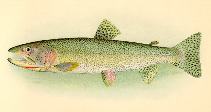 Oncorhynchus clarkii
Female Изображение сделано Bull. U.S. Bur. Fish.
изображения | Видео | Изображение на Google
Female Изображение сделано Bull. U.S. Bur. Fish.
Классификация / Имена народные названия | синонимы | Catalog of Fishes(род, виды) | ITIS | CoL | WoRMS | Cloffa
> Salmoniformes (Salmons) > Salmonidae (Salmonids) > Salmoninae
Etymology: Oncorhynchus: Greek, onyx, -ychos = nail + Greek, rhyngchos = snout (Ref. 45335); clarkii: Named after William Clark, leader of the Lewis and Clark expedition (Ref. 1998).
Eponymy: Captain William Clark (1770–1838) was an American explorer and soldier who later became Governor of Missouri Territory. [...] (Ref. 128868), visit book page.
More on author: Richardson.
Etymology: Oncorhynchus: Greek, onyx, -ychos = nail + Greek, rhyngchos = snout (Ref. 45335); clarkii: Named after William Clark, leader of the Lewis and Clark expedition (Ref. 1998).
Eponymy: Captain William Clark (1770–1838) was an American explorer and soldier who later became Governor of Missouri Territory. [...] (Ref. 128868), visit book page.
More on author: Richardson.
Taxonomic Remarks
Synonymy to clarify with Oncorhynchus clarkii lewisi (Girard, 1856) [or Suckley, 1874?].
Окружающая среда: среда / климатическая зона / пределы глубины / диапазон распространения экология
морской; пресноводный; солоноватоводный демерсальный; анадромный (Ref. 27547); пределы глубины 0 - 200 m (Ref. 50610). Temperate; ? - 23°C (Ref. 12741); 61°N - 40°N
распространение Территории | регионы FAO | Экосистемы | места находок | карта точек | интродукции | Faunafri
Eastern Pacific: northern parts of Prince William Sound, Alaska, south to the Eel River in northern California, USA and is found in most streams emptying into the Pacific.
Widely introduced into various streams and lakes within its natural range, as well as into a few lakes in eastern North America. In some streams it may be the most numerous sport fish present, while other streams support only small populations. At least 14 subspecies have been historically recognized (Ref. 5723).
Длина при первой зрелости / Размер / Вес / Возраст
половая зрелость: Lm 15.2, range 15 - 18 cm
Max length : 99.0 cm TL самец/пол неопределен; (Ref. 12204); наибольший вес (опубликованные данные): 18.6 kg (Ref. 9988); наибольший возраст (опубликованны данные): 13 годы (Ref. 119181)
Max length : 99.0 cm TL самец/пол неопределен; (Ref. 12204); наибольший вес (опубликованные данные): 18.6 kg (Ref. 9988); наибольший возраст (опубликованны данные): 13 годы (Ref. 119181)
Краткое описание определительные ключи | морфология | морфометрия
колючие лучи спинного плавника (общее число) : 0; членистые (мягкие) лучи спинного плавника (общее число) : 8 - 11; колючие лучи анального плавника: 0; членистые (мягкие) лучи анального плавника: 8 - 12. Color is variable. Generally dark green to greenish-blue on back, olive-green on upper flank, silvery on lower flank and belly; flanks spots below lateral line are more numerous anteriorly; irregular spots on dorsal, adipose and caudal fins and the anal, pectoral and pelvic fin bases; gill covers are pinkish. Those found at sea or recent migrants to freshwater are silvery with a bluish back, yellowish lower flanks and fins, and sparse spots.
Body shape (shape guide): fusiform / normal; Cross section: oval.
Body shape (shape guide): fusiform / normal; Cross section: oval.
Prefers relatively small streams, with gravel bottoms and gentle gradients. Spawning adults migrate from the sea into streams to spawn (Ref. 27547). The young fish usually stay in the stream for a year or two before entering the sea, but some populations never got to sea at all. In rare cases, some individuals of sea-going populations, may remain in fresh water for as long as eight years (Ref. 28866, 28869). Feeds on small fishes, crustaceans, and insects (Ref. 4925). The flesh is orange-red and of excellent flavor (Ref. 27547). Utilized fresh and eaten fried, broiled, and baked (Ref. 9988). This species does not compete well with other fish, tends to hybridize, and is unable to withstand fishing pressure = depletion of stocks.
Жизненный цикл и брачное поведение половая зрелость | размножение | нерест | икра | Плодовитость | личинки
Spawning occurs both daytime and nighttime. The female selects a site and builds a redd while the male courts her and drives away other males. Upon completion of the redd, the female settles into the pitt, immediately followed by the male. The pair releases eggs and sperm simultaneously and the eggs fall into the spaces between the gravel. The female then moves to the upstream edge of the redd and resumes digging, thereby covering the eggs. When completely covered, the female may use the new redd to spawn once more or she may look for another spot and repeat the entire process. Both males and females spawn with one or more members of the opposite sex (Ref. 12204, 27547). Reproductive strategy: synchronous ovarian organization, determinate fecundity (Ref. 51846).
Основная ссылка
Загрузите свои рекомендации | ссылки | координатор | соавторы
Coad, B.W., 1995. Encyclopedia of Canadian fishes. Canadian Museum of Nature and Canadian Sportfishing Productions Inc. Singapore. (Ref. 12204)
Статус Красного Списка МСОП (Ref. 130435: Version 2025-2 (Global))
Не вызывающий беспокойства (LC) ; Date assessed: 23 July 2020
CITES
Not Evaluated
Угроза для людей
Harmless
Использование человеком
рыболовство: коммерческий; аквакультура (рыбоводство): коммерческий; объект спортивного рыболовства: да; аквариум: общественные аквариумы
FAO - Publication: search | FishSource |
дополнительная информация
Трофическая экология
Пищевые предметы (добыча)
состав пищи
потребление пищи
Продовольственные пайки
хищники
Пищевые предметы (добыча)
состав пищи
потребление пищи
Продовольственные пайки
хищники
Динамика численности населения
Параметры роста
Макс. возраст / размер
Отношение длины к весу.
Отношение длины к длине.
Размерный состав
Преобразование массы
пополнение
численность
Параметры роста
Макс. возраст / размер
Отношение длины к весу.
Отношение длины к длине.
Размерный состав
Преобразование массы
пополнение
численность
Жизненный цикл
размножение
половая зрелость
Зрелость/Жиры относительно.
Плодовитость
нерест
Нерестовые скопления
икра
Развитие икры
личинки
динамика численности личинок
размножение
половая зрелость
Зрелость/Жиры относительно.
Плодовитость
нерест
Нерестовые скопления
икра
Развитие икры
личинки
динамика численности личинок
Анатомия
жаберная область
Мозг
Отолит
жаберная область
Мозг
Отолит
Физиология
Состав тела
Питательные вещества
Потребление кислорода
Тип плавания
Скорость плавания
Зрительные пигменты
Звук рыбы
Болезни и паразиты
Токсичность (LC50s)
Состав тела
Питательные вещества
Потребление кислорода
Тип плавания
Скорость плавания
Зрительные пигменты
Звук рыбы
Болезни и паразиты
Токсичность (LC50s)
Связанные с человеком
Системы аквакультуры
особенности рыбоводства
степень растяжения
Случаи заболевания сигуатерой
Марки, монеты и прочее.
Системы аквакультуры
особенности рыбоводства
степень растяжения
Случаи заболевания сигуатерой
Марки, монеты и прочее.
инструменты
Органическая викторина | Электронная книга | полевой определитель | определительные ключи | Длина-Частота | онтогенез | карта точек |
Catch-MSY |
Специальные отчеты
Проверить содержание в аквариумах | Проверить опубликованные видовые данные | Проверить опубликованные данные по аквакультуре
Скачать в формате XML
ресурсы в Интернет
AFORO (otoliths) | Alien/Invasive Species database | Aquatic Commons | BHL | Cloffa | Websites from users | Проверить FishWatcher | CISTI | Catalog of Fishes: род, виды | DiscoverLife | ECOTOX | FAO - Publication: search | Faunafri | Fishipedia | Fishtrace | GloBI | Google Books | Google Scholar | Google | IGFA World Record | национальные базы данных | OneZoom | Open Tree of Life | Otolith Atlas of Taiwan Fishes | общественные аквариумы | PubMed | Reef Life Survey | Socotra Atlas | TreeBase | Tree of Life | Wikipedia: Вперёд, поиск | World Records Freshwater Fishing | Зоологическая летопись
Оценки, основанные на моделях
Предпочтительная температура (ссылка 123201): 6.1 - 9.7, mean 8.1 °C (based on 81 cells).
Индекс филогенетического разнообразия (ссылка 82804): PD50 = 0.5000 [Uniqueness, from 0.5 = low to 2.0 = high].
Bayesian length-weight: a=0.00891 (0.00713 - 0.01114), b=3.02 (2.98 - 3.06), in cm total length, based on LWR estimates for this species (Ref. 93245).
Трофический уровень (ссылка 69278): 3.8 ±0.56 se; based on food items.
Generation time: 4.4 ( na - na) years. Estimated as median ln(3)/K based on 1 growth studies.
устойчивость к внешним воздействиям (ссылка 120179): средний (среднего размера), минимальное время удвоения популяции 1.4-4.4 года (tm=2-3; tmax=10; Fec=226).