



Acipenser fulvescens Rafinesque, 1817
Lake sturgeon
Загрузить свой Фото и Видео
изображения | Видео | Изображение на Google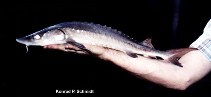 Acipenser fulvescens
Изображение сделано The Native Fish Conservancy
изображения | Видео | Изображение на Google
Изображение сделано The Native Fish Conservancy
Классификация / Имена народные названия | синонимы | Catalog of Fishes(род, виды) | ITIS | CoL | WoRMS | Cloffa
> Acipenseriformes (Sturgeons and paddlefishes) > Acipenseridae (Sturgeons)
Etymology: Acipenser: Latin, acipenser = sturgeon, 1853 (Ref. 45335).
More on author: Rafinesque.
Etymology: Acipenser: Latin, acipenser = sturgeon, 1853 (Ref. 45335).
More on author: Rafinesque.
Окружающая среда: среда / климатическая зона / пределы глубины / диапазон распространения экология
; пресноводный; солоноватоводный демерсальный; мигрирует в реке (Ref. 116361); пределы глубины 5 - 9 m (Ref. 117245). Temperate; 60°N - 30°N, 100°W - 71°W
распространение Территории | регионы FAO | Экосистемы | места находок | карта точек | интродукции | Faunafri
North America: St. Lawrence-Great Lakes, Hudson Bay, and Mississippi River basins.
Длина при первой зрелости / Размер / Вес / Возраст
половая зрелость: Lm 99.7, range 90 - 120 cm
Max length : 274 cm TL самец/пол неопределен; (Ref. 5723); common length : 97.5 cm TL самец/пол неопределен; (Ref. 12193); наибольший вес (опубликованные данные): 125.0 kg (Ref. 3672); наибольший возраст (опубликованны данные): 152 годы (Ref. 72475)
Max length : 274 cm TL самец/пол неопределен; (Ref. 5723); common length : 97.5 cm TL самец/пол неопределен; (Ref. 12193); наибольший вес (опубликованные данные): 125.0 kg (Ref. 3672); наибольший возраст (опубликованны данные): 152 годы (Ref. 72475)
Краткое описание определительные ключи | морфология | морфометрия
Single row of preanal shields. Soft area on the top of the head absent and black viscera. Large blotches present on anterior half of upper surface of snout and on back. Lower surface whitish (Ref. 37032). Anal fin origin behind dorsal fin origin; scutes on back and along side same color as skin (Ref. 86798).
Body shape (shape guide): elongated.
Body shape (shape guide): elongated.
Adults inhabit bottom of lakes and large rivers (Ref. 10294), usually in 5-9 m depth, over mud, sand, and gravel. Occasionally enters brackish water. A specimen caught in 1952 was reputed to have been 152 years old (Ref. 6866). Search for food, with the aid of the sensory ability of the barbels, by constantly moving close to the substrate. Omnivorous, virtually anything edible that enters the mouth is sucked up and consumed. The food is worked or pulled in the mouth, often partly ejected and sucked in again (Ref. 1998). Spawning sites are rocky and boulder filled areas along the outside bend of rivers (Ref. 41542). In the 1800s, it was extensively exploited for oil to fire boilers on steamboats, animal feed and fertilizer. Later is was high-valued as smoked, caviar and isinglass (Ref. 117245). In 1951, Canada, 2,000 lbs. of caviar were made from the eggs (Ref. 37032). It continous to be an important source of food for Indigenous people in North America (Ref. 117245). Threatened due to over harvesting, habitat loss and pollution (Ref. 58490).
Жизненный цикл и брачное поведение половая зрелость | размножение | нерест | икра | Плодовитость | личинки
Spawning sites are rocky and boulder filled areas along the outside bend of rivers (Ref. 41542).
Основная ссылка
Загрузите свои рекомендации | ссылки | координатор | соавторы
Page, L.M. and B.M. Burr, 1991. A field guide to freshwater fishes of North America north of Mexico. Houghton Mifflin Company, Boston. 432 p. (Ref. 5723)
Статус Красного Списка МСОП (Ref. 130435: Version 2025-2 (Global))
Под угрозой исчезновения (EN) (A2bcd); Date assessed: 14 September 2019
Угроза для людей
Harmless
Использование человеком
рыболовство: коммерческий; аквакультура (рыбоводство): экспериментальный; объект спортивного рыболовства: да; аквариум: общественные аквариумы
FAO - рыболовство: Видовой профиль; Publication: search | FishSource |
дополнительная информация
Трофическая экология
Пищевые предметы (добыча)
состав пищи
потребление пищи
Продовольственные пайки
хищники
Пищевые предметы (добыча)
состав пищи
потребление пищи
Продовольственные пайки
хищники
Динамика численности населения
Параметры роста
Макс. возраст / размер
Отношение длины к весу.
Отношение длины к длине.
Размерный состав
Преобразование массы
пополнение
численность
Параметры роста
Макс. возраст / размер
Отношение длины к весу.
Отношение длины к длине.
Размерный состав
Преобразование массы
пополнение
численность
Жизненный цикл
размножение
половая зрелость
Зрелость/Жиры относительно.
Плодовитость
нерест
Нерестовые скопления
икра
Развитие икры
личинки
динамика численности личинок
размножение
половая зрелость
Зрелость/Жиры относительно.
Плодовитость
нерест
Нерестовые скопления
икра
Развитие икры
личинки
динамика численности личинок
Анатомия
жаберная область
Мозг
Отолит
жаберная область
Мозг
Отолит
Физиология
Состав тела
Питательные вещества
Потребление кислорода
Тип плавания
Скорость плавания
Зрительные пигменты
Звук рыбы
Болезни и паразиты
Токсичность (LC50s)
Состав тела
Питательные вещества
Потребление кислорода
Тип плавания
Скорость плавания
Зрительные пигменты
Звук рыбы
Болезни и паразиты
Токсичность (LC50s)
Связанные с человеком
Системы аквакультуры
особенности рыбоводства
степень растяжения
Случаи заболевания сигуатерой
Марки, монеты и прочее.
Системы аквакультуры
особенности рыбоводства
степень растяжения
Случаи заболевания сигуатерой
Марки, монеты и прочее.
инструменты
Электронная книга | полевой определитель | определительные ключи | Длина-Частота | онтогенез | карта точек |
Catch-MSY |
Специальные отчеты
Проверить содержание в аквариумах | Проверить опубликованные видовые данные | Проверить опубликованные данные по аквакультуре
Скачать в формате XML
ресурсы в Интернет
AFORO (otoliths) | Alien/Invasive Species database | Aquatic Commons | BHL | Cloffa | Websites from users | Проверить FishWatcher | CISTI | Catalog of Fishes: род, виды | DiscoverLife | ECOTOX | FAO - рыболовство: Видовой профиль; Publication: search | Faunafri | Fishipedia | Fishtrace | GloBI | Google Books | Google Scholar | Google | IGFA World Record | OneZoom | Open Tree of Life | Otolith Atlas of Taiwan Fishes | PubMed | Reef Life Survey | Socotra Atlas | TreeBase | Tree of Life | Wikipedia: Вперёд, поиск | World Records Freshwater Fishing | Зоологическая летопись
Оценки, основанные на моделях
Индекс филогенетического разнообразия (ссылка 82804): PD50 = 0.5000 [Uniqueness, from 0.5 = low to 2.0 = high].
Bayesian length-weight: a=0.00269 (0.00214 - 0.00339), b=3.18 (3.13 - 3.23), in cm total length, based on LWR estimates for this species (Ref. 93245).
Трофический уровень (ссылка 69278): 3.3 ±0.49 se; based on food items.
устойчивость к внешним воздействиям (ссылка 120179): очень низкий, минимальное время удвоения популяции более 14 лет (tm=16-26; tmax=152; K=0.04; Fec=50,000).