



Hochladen Photos und videos
Bilder | Briefmarken, Münzen, Verschiedenes. | Google Bild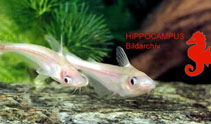 Schilbe mystus
Photo von Hippocampus-Bildarchiv
Bilder | Briefmarken, Münzen, Verschiedenes. | Google Bild
Photo von Hippocampus-Bildarchiv
Klassifizierung / Names Namen | Synonyme | Catalog of Fishes(Gattung, Arten) | ITIS | CoL | WoRMS | Cloffa
> Siluriformes (Catfishes) > Schilbeidae (Schilbid catfishes)
Etymology: mystus: Probably from the Greek "mustes" which literally means "initiated in the mysteries" (Ref. 43912).
More on author: Linnaeus.
Etymology: mystus: Probably from the Greek "mustes" which literally means "initiated in the mysteries" (Ref. 43912).
More on author: Linnaeus.
Taxonomic Remarks
This species was commonly known as Schilbe (Eutropius) niloticus; the morphological examination of the holotype of Silurus mystus Linnaeus, 1758 (De Vos and Skelton, 1990) has shown that this specimen and Schilbe (Eutropius) niloticus Rüppel, 1829 belong to the same species; this results in the substitution of the name S. niloticus by the oldest name available, in this case, S. mystus.
Umwelt: Milieu / Klimazone / Tiefenbereich / Verbreitungsgebiet Ökologie
; süßwasser demersal; potamodrom (Ref. 138143); tiefenbereich 4 - 69 m. Tropical; 23°C - 27°C (Ref. 1672); 25°N - 27°S, 17°W - 45°E
Verbreitung Territorien | FAO Gebiete | Ökosysteme | Vorkommen | Punkt Karte | Einführungen | Faunafri
Africa: Nilo-Sudanese species, known from the Nile basin and in West Africa from the Senegal River eastwards to the Cross, Wouri and Sanaga River, including the Chad basin (Ref. 43912). Various reports, including from the Ogowe and Congo River basin or Zambia and Zimbabwe, are based on misidentifications (Ref. 43912). Reports from Angola and Tanzania are questionable and need confirmation.
Länge bei der ersten Reifung / Größe / Gewicht / Alter
Geschlechtsreife: Lm 13.1, range 15 - ? cm
Max length : 35.0 cm SL Männchen/unbestimmt; (Ref. 57127); max. veröff. Gewicht: 250.00 g (Ref. 3799); max. veröff. Alter: 7 Jahre (Ref. 7248)
Max length : 35.0 cm SL Männchen/unbestimmt; (Ref. 57127); max. veröff. Gewicht: 250.00 g (Ref. 3799); max. veröff. Alter: 7 Jahre (Ref. 7248)
Kurzbeschreibung Bestimmungsschlüssel | Morphologie | Morphometrie
Rückenflossenstacheln (insgesamt) : 1; Rückenflossenweichstrahlen (insgesamt) : 6. Diagnosis: adipose fin present (Ref. 43912, 57127, 81643) and fully developed (Ref. (Ref. 57127, 81643). Anterior nostrils more closer to each other than to posterior ones; inner margin of pectoral-fin spine strongly denticulate posteriorly (Ref. 43912, 57127, 81643). Nasal barbel reaching to anterior eye margin (Ref. 57127, 81643), but never extending beyond posterior margin of eye (Ref. 43912, 57127, 81643). Mouth subterminal (Ref. 57127, 81643), snout reaching beyond lower jaw (Ref. 43912). 45-64 branched anal-fin rays and 8-15 gill rakers on lower limb of first gill arch (Ref. 43912, 57127, 81643).
Body shape (shape guide): fusiform / normal; Cross section: compressed.
Body shape (shape guide): fusiform / normal; Cross section: compressed.
Lacustrine as well as fluviatile species, confined to lakes and moderate to large rivers (Ref. 43912). Adults shoal in standing or slowly flowing open water with emergent or submerged vegetation. Generally more active at night or in subdued light. They feed from mid-water and surface waters on a wide variety of foods including fish, insects, shrimps, snails, plant seeds, and fruit. Oviparous, eggs are unguarded (Ref. 205). Often important spawning migrations occur (Ref. 43912). They breed during the rainy season and may be either a single or multiple spawner in different localities, laying eggs on vegetation. May live up to 6-7 years (Ref. 7248). Max total length 45.0mm (Ref. 43912). Also caught with drawnets. In general considered as a flavoured, first class eating fish (Ref. 43912).
Lebenszyklus und Paarungsverhalten Geschlechtsreife | Fortpflanzung | Ablaichen | Eier | Fruchtbarkeit | Larven
Distinct pairing (Ref. 205).
Hauptreferenz
Laden Sie Ihre Referenzen hoch | Referenzen | Koordinator | Partner
De Vos, L., 1995. A systematic revision of the African Schilbeidae (Teleostei, Siluriformes). With an annotated bibliography. Ann. Mus. R. Afr. Centr., Sci. Zool., 271:1-450. (Ref. 43912)
IUCN Rote Liste Status (Ref. 130435: Version 2025-2 (Global))
nicht bedroht (LC) ; Date assessed: 04 November 2019
CITES
Not Evaluated
Bedrohung für Menschen
Harmless
Nutzung durch Menschen
Fischereien: kommerziell; Sportfisch: ja; Aquarium: Kommerziell
FAO - Publication: search | FishSource |
Mehr Information
Trophische Ökologie
Lebensmittel (Beutetiere)
Nahrungszusammensetzung
Nahrungsaufnahme
Lebensmittelrationen
Räuber
Lebensmittel (Beutetiere)
Nahrungszusammensetzung
Nahrungsaufnahme
Lebensmittelrationen
Räuber
Populationsdynamik
Wachstumsparameter
Max. Alter/Größen
Länge-Gewicht-Rel.
Länge-Länge-Verhältnis.
Längenhäufigkeiten
Massenkonvertierung
Rekrutierung
Dichte
Wachstumsparameter
Max. Alter/Größen
Länge-Gewicht-Rel.
Länge-Länge-Verhältnis.
Längenhäufigkeiten
Massenkonvertierung
Rekrutierung
Dichte
Lebenszyklus
Fortpflanzung
Geschlechtsreife
Reifung/Kiemen rel.
Fruchtbarkeit
Ablaichen
Laichaggregationen
Eier
Eientwicklung
Larven
Larven Pop.Dyn.
Fortpflanzung
Geschlechtsreife
Reifung/Kiemen rel.
Fruchtbarkeit
Ablaichen
Laichaggregationen
Eier
Eientwicklung
Larven
Larven Pop.Dyn.
Anatomie
Kiemenoberfläche
Gehirn
Otolith
Kiemenoberfläche
Gehirn
Otolith
Physiologie
Körperliche Zusammensetzung
Nährstoffe
Sauerstoffverbrauch
Schwimmart
Schwimmgeschwindigkeit
Visuelle Pigmente
Fischgeräusche
Krankheiten und Parasiten
Toxizität (LC50s)
Körperliche Zusammensetzung
Nährstoffe
Sauerstoffverbrauch
Schwimmart
Schwimmgeschwindigkeit
Visuelle Pigmente
Fischgeräusche
Krankheiten und Parasiten
Toxizität (LC50s)
Menschenbezogen
Aquakultur-Systeme
Aquakultur Profile
Zuchtlinien
Ciguatera-Fälle
Briefmarken, Münzen, Verschiedenes.
Aquakultur-Systeme
Aquakultur Profile
Zuchtlinien
Ciguatera-Fälle
Briefmarken, Münzen, Verschiedenes.
Tools
Bio-Quiz | E-Book | Feldführer | Bestimmungsschlüssel | Längenhäufigkeits Tool | Lebensdaten Tool | Punkt Karte |
Catch-MSY |
Zusatzinformationen
Download XML
Zusammenfassung | Punktdaten | Namen | Photos
Internet Quellen
AFORO (otoliths) | Alien/Invasive Species database | Aquatic Commons | BHL | Cloffa | Websites from users | FishWatcher Einträge suchen | CISTI | Catalog of Fishes: Gattung, Arten | DiscoverLife | ECOTOX | FAO - Publication: search | Faunafri | Fishipedia | Fishtrace | GloBI | Google Books | Google Scholar | Google | IGFA World Record | OneZoom | Open Tree of Life | Otolith Atlas of Taiwan Fishes | Öffentliche Aquarien | PubMed | Reef Life Survey | Socotra Atlas | TreeBase | Tree of Life | Wikipedia: Gehe zu, Suchen | World Records Freshwater Fishing | Zoologischer Rekord
Schätzungen auf der Grundlage von Modellen
Phylogenetischer Diversitätsindex (Ref. 82804): PD50 = 0.5000 [Uniqueness, from 0.5 = low to 2.0 = high].
Bayesian length-weight: a=0.00741 (0.00588 - 0.00934), b=3.02 (2.95 - 3.09), in cm total length, based on LWR estimates for this species (Ref. 93245).
Trophische Ebene (Ref. 69278): 3.5 ±0.4 se; based on diet studies.
Widerstandsfähigkeit (Ref. 120179): mittel, Verdopplung der Population dauert 1,4 - 4,4 Jahre. (K=0.09-0.94; tmax=6-7; assuming fec > 10,000).
Nährstoffe (Ref. 124155): Calcium = 128 [51, 292] mg/100g; Iron = 1.48 [0.69, 2.75] mg/100g; Protein = 16.9 [15.1, 18.7] %; Omega3 = 0.542 [0.207, 1.418] g/100g; Selenium = 78.6 [34.3, 193.3] μg/100g; VitaminA = 37.6 [13.9, 92.5] μg/100g; Zinc = 1.5 [1.0, 2.1] mg/100g (wet weight);