



Hochladen Photos und videos
Bilder | videos | Google Bild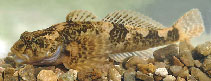 Cottus gobio
Photo von Kohout, J.
Bilder | videos | Google Bild
Photo von Kohout, J.
Klassifizierung / Names Namen | Synonyme | Catalog of Fishes(Gattung, Arten) | ITIS | CoL | WoRMS | Cloffa
> Perciformes/Cottoidei (Sculpins) > Cottidae (Sculpins)
Etymology: Cottus: Greek, kottos = a fish (Ref. 45335).
More on author: Linnaeus.
Etymology: Cottus: Greek, kottos = a fish (Ref. 45335).
More on author: Linnaeus.
Taxonomic Remarks
Junior synonym Cottus jaxartensis is a valid species according to Sideleva, 2021 (Ref. 129291) and Cottus nudus is a primary homonyn and permanently invalid (include in Ref. 129291 Quote).
Umwelt: Milieu / Klimazone / Tiefenbereich / Verbreitungsgebiet Ökologie
; süßwasser; brackwasser demersal; pH range: 7.0 - 7.5; dH range: 10 - ?; potamodrom (Ref. 51243); tiefenbereich 2 - 2 m (Ref. 58018). Subtropical; 1°C - 16°C (Ref. 45166); 70°N - 40°N, 6°W - 60°E
Verbreitung Territorien | FAO Gebiete | Ökosysteme | Vorkommen | Punkt Karte | Einführungen | Faunafri
Europe: North Baltic in Scandinavia south to stream Maurine in southwesternmost of corner of Baltic basin (Germany); lower reaches of streams and rivers and along coast of Sweden, Finland, Russia southwest to Estonia; Danube (except upper tributaries Save and Arges), Elbe, Ems, Weser and Rhône drainages; tributaries of upper Rhine downriver (northward) to about Mannheim; a few of uppermost tributaries of River Tevere, central Italy; Adriatic drainages from Potenza in Italy to Zrmanja in Croatia, except Timavo spring. Locally introduced in Scheldt drainage in Belgium.
Länge bei der ersten Reifung / Größe / Gewicht / Alter
Geschlechtsreife: Lm 4.2 range ? - ? cm
Max length : 18.0 cm TL Männchen/unbestimmt; (Ref. 556); common length : 10.0 cm TL Männchen/unbestimmt; (Ref. 556); max. veröff. Alter: 10 Jahre (Ref. 74370)
Max length : 18.0 cm TL Männchen/unbestimmt; (Ref. 556); common length : 10.0 cm TL Männchen/unbestimmt; (Ref. 556); max. veröff. Alter: 10 Jahre (Ref. 74370)
Kurzbeschreibung Bestimmungsschlüssel | Morphologie | Morphometrie
Rückenflossenstacheln (insgesamt) : 6 - 8; Rückenflossenweichstrahlen (insgesamt) : 15 - 18; Afterflossenstacheln: 0; Afterflossenweichstrahlen: 10 - 13; Wirbelzahl: 31 - 34. Caudal fin with 13 to 14 rays (Ref. 40476).
Body shape (shape guide): fusiform / normal.
Body shape (shape guide): fusiform / normal.
Occurs in cold, clear and fast-flowing water of small stream to medium-sized rivers as well as on gravel or rocky shores of cold lakes and in slightly brackish waters along eastern coast of Baltic coast (Ref. 59043). Feeds on small bottom invertebrates, mainly insects, crustaceans. Pink to yellow eggs are found in clumps attached to undersides of large stones (Ref. 41678). Contrary to statements in older literature, eggs and larvae of fishes are not a common food item (Ref. 45167).
Lebenszyklus und Paarungsverhalten Geschlechtsreife | Fortpflanzung | Ablaichen | Eier | Fruchtbarkeit | Larven
Spawns once a year for several years in low productivity streams, but exhibits multiple spawning within a season in high productivity environments (Ref. 40290, 40754). Male protects several batches of eggs--deposited below a stone--for about 3 weeks. Larvae are not guarded and may occasionally been eaten (Ref. 45166). Also Ref. 26506.
Hauptreferenz
Laden Sie Ihre Referenzen hoch | Referenzen | Koordinator | Partner
Freyhof, J., M. Kottelat and A. Nolte, 2005. Taxonomic diversity of European Cottus with description of eight new species (Teleostei: Cottidae). Ichthyol. Explor. Freshwat. 16(2):107-172. (Ref. 55856)
IUCN Rote Liste Status (Ref. 130435: Version 2025-2 (Global))
nicht bedroht (LC) ; Date assessed: 27 July 2023
CITES
Not Evaluated
Bedrohung für Menschen
Harmless
Nutzung durch Menschen
Fischereien: nicht kommerziell; Köder: occasionally
FAO - Publication: search | FishSource |
Mehr Information
Trophische Ökologie
Lebensmittel (Beutetiere)
Nahrungszusammensetzung
Nahrungsaufnahme
Lebensmittelrationen
Räuber
Lebensmittel (Beutetiere)
Nahrungszusammensetzung
Nahrungsaufnahme
Lebensmittelrationen
Räuber
Populationsdynamik
Wachstumsparameter
Max. Alter/Größen
Länge-Gewicht-Rel.
Länge-Länge-Verhältnis.
Längenhäufigkeiten
Massenkonvertierung
Rekrutierung
Dichte
Wachstumsparameter
Max. Alter/Größen
Länge-Gewicht-Rel.
Länge-Länge-Verhältnis.
Längenhäufigkeiten
Massenkonvertierung
Rekrutierung
Dichte
Lebenszyklus
Fortpflanzung
Geschlechtsreife
Reifung/Kiemen rel.
Fruchtbarkeit
Ablaichen
Laichaggregationen
Eier
Eientwicklung
Larven
Larven Pop.Dyn.
Fortpflanzung
Geschlechtsreife
Reifung/Kiemen rel.
Fruchtbarkeit
Ablaichen
Laichaggregationen
Eier
Eientwicklung
Larven
Larven Pop.Dyn.
Physiologie
Körperliche Zusammensetzung
Nährstoffe
Sauerstoffverbrauch
Schwimmart
Schwimmgeschwindigkeit
Visuelle Pigmente
Fischgeräusche
Krankheiten und Parasiten
Toxizität (LC50s)
Körperliche Zusammensetzung
Nährstoffe
Sauerstoffverbrauch
Schwimmart
Schwimmgeschwindigkeit
Visuelle Pigmente
Fischgeräusche
Krankheiten und Parasiten
Toxizität (LC50s)
Menschenbezogen
Aquakultur-Systeme
Aquakultur Profile
Zuchtlinien
Ciguatera-Fälle
Briefmarken, Münzen, Verschiedenes.
Aquakultur-Systeme
Aquakultur Profile
Zuchtlinien
Ciguatera-Fälle
Briefmarken, Münzen, Verschiedenes.
Tools
Bio-Quiz | E-Book | Feldführer | Bestimmungsschlüssel | Längenhäufigkeits Tool | Lebensdaten Tool | Punkt Karte |
Catch-MSY |
Zusatzinformationen
Download XML
Zusammenfassung | Punktdaten | Namen | Photos
Internet Quellen
AFORO (otoliths) | Alien/Invasive Species database | Aquatic Commons | BHL | Cloffa | Websites from users | FishWatcher Einträge suchen | CISTI | Catalog of Fishes: Gattung, Arten | DiscoverLife | DORIS | ECOTOX | FAO - Publication: search | Faunafri | Fishipedia | Fishtrace | GloBI | Google Books | Google Scholar | Google | IGFA World Record | Nationale Datenbanken | OneZoom | Open Tree of Life | Otolith Atlas of Taiwan Fishes | Öffentliche Aquarien | PubMed | Reef Life Survey | Socotra Atlas | TreeBase | Tree of Life | Wikipedia: Gehe zu, Suchen | World Records Freshwater Fishing | Zoobank | Zoologischer Rekord
Schätzungen auf der Grundlage von Modellen
Phylogenetischer Diversitätsindex (Ref. 82804): PD50 = 0.5000 [Uniqueness, from 0.5 = low to 2.0 = high].
Bayesian length-weight: a=0.00871 (0.00586 - 0.01294), b=3.13 (3.01 - 3.25), in cm total length, based on LWR estimates for this species & (Sub)family-body (Ref. 93245).
Trophische Ebene (Ref. 69278): 3.2 ±0.2 se; based on diet studies.
Widerstandsfähigkeit (Ref. 120179): mittel, Verdopplung der Population dauert 1,4 - 4,4 Jahre. (tm=1-3).