



Luciobarbus capito (Güldenstädt, 1773)
Bulatmai barbel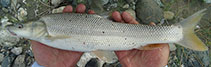
分類 / 名稱 俗名 | 同種異名 | Catalog of Fishes(屬, 種) | ITIS | CoL | WoRMS | Cloffa
Teleostei > Cypriniformes (Carps) 鯉形目 (Carps) > Cyprinidae (Minnows or carps) 鯉科 (Minnows or carps) > Barbinae
環境: 環境 / 氣候帶 / 深度上下限 / 配送範圍 生態學
; 淡水; 半鹹淡水 底中水層性; 溯河洄游 (Ref. 59043). 溫帶
分布 領土 | FAO區域 | 生態系 | 發現紀錄 | 分布圖 | 簡介 | Faunafri
Europe and Asia: Caspian basin, from Volga southward to Atrek (Iran); Aral basin in Amu Darya, Syr Darya and Chu drainages.
前蘇聯與亞洲: 裡海與鹹海.(參考文獻 26334) 亞拉流域, 在 Amu Darya ,錫爾河與 Chu 流域.(參考文獻 59043)
前蘇聯與亞洲: 裡海與鹹海.(參考文獻 26334) 亞拉流域, 在 Amu Darya ,錫爾河與 Chu 流域.(參考文獻 59043)
大小 / 重量 / 年齡
成熟度: Lm ? range ? - ? cm
Max length : 105 cm TL 雄魚/尚未辨別雌雄; (Ref. 1441); common length : 65.0 cm TL 雄魚/尚未辨別雌雄; (Ref. 1441); 最大體重: 15.0 kg (Ref. 59043)
Max length : 105 cm TL 雄魚/尚未辨別雌雄; (Ref. 1441); common length : 65.0 cm TL 雄魚/尚未辨別雌雄; (Ref. 1441); 最大體重: 15.0 kg (Ref. 59043)
簡短描述 檢索表 | 型態特徵 | 形態測量圖
背棘 (總數) : 4; 背的軟條 (總數) : 8; 臀棘: 2; 臀鰭軟條: 5. Diagnosed from other species of Barbus and Luciobarbus in Caspian Se basin by having the following characters: predorsal length longer than postdorsal length; dorsal fin with 8½ branched rays; 12-18 gill rakers; back between head and dorsal origin laterally compressed, forming a keel; lateral line with 52-72 (usually 60-66) scales; and lower lip thin, without median lobe or pad (Ref. 59043).
Body shape (shape guide): elongated.
Body shape (shape guide): elongated.
Adults occur in the sea, mostly close to shores and forages also in estuaries. They are semi-anadromous and non-anadromous, rarely landlocked in reservoirs. Adults and juveniles feed on invertebrates, algae, detritus, plant material, and small fishes, while larvae prey on zooplankton and small benthic invertebrates. Spawn in lowland streams and rivers on sand-gravel bottom, usually in strong current. Undertake migration to uppermost tributaries of rivers. Non-anadromous populations begin to migrate during late summer-autumn and spawn following spring, but some enter rivers in early spring and spawn same year. Migration by non-anadromous populations takes place just before spawning to upper stretches of tributaries or spawn in lakes and reservoirs on sand to mud bottom (Ref. 59043).
在海上, 大部份接近海岸。 在河口也覓食。 產卵在沙子-礫石的底部上的低地溪流與河川, 通常在強的水流。 半-溯河洄游產卵與非溯河洄游產卵的個體與族群, 非陸封的在水庫。 仔魚吃浮游動物與小型底棲的無脊椎動物。 稚魚與成魚吃無脊椎動物,藻類,碎屑,植物與小魚。 (參考文獻 59043)
在海上, 大部份接近海岸。 在河口也覓食。 產卵在沙子-礫石的底部上的低地溪流與河川, 通常在強的水流。 半-溯河洄游產卵與非溯河洄游產卵的個體與族群, 非陸封的在水庫。 仔魚吃浮游動物與小型底棲的無脊椎動物。 稚魚與成魚吃無脊椎動物,藻類,碎屑,植物與小魚。 (參考文獻 59043)
生命週期和交配行為 成熟度 | 繁殖 | 產卵場 | 卵 | 孕卵數 | 仔魚
前蘇聯與亞洲: 裡海與鹹海.(參考文獻 26334) 亞拉流域, 在 Amu Darya ,錫爾河與 Chu 流域.(參考文獻 59043)
主要參考資料
上傳您的推薦信 | 參考文獻 | 合作者 | 合作者
Kottelat, M. and J. Freyhof, 2007. Handbook of European freshwater fishes. Publications Kottelat, Cornol and Freyhof, Berlin. 646 pp. (Ref. 59043)
CITES
Not Evaluated
對人類具威脅
無害處的
人類使用
FAO - Publication: search | FishSource |
更多資訊
解剖學
鰓區
腦部
耳石
鰓區
腦部
耳石
生理學
身體成分
營養素
耗氧量
游泳類型
游泳速度
視覺色素
魚聲
疾病與寄生蟲
毒性 (LC50s)
身體成分
營養素
耗氧量
游泳類型
游泳速度
視覺色素
魚聲
疾病與寄生蟲
毒性 (LC50s)
遺傳學
基因組
遺傳學
異種性
遺傳率
遺傳多樣性
基因組
遺傳學
異種性
遺傳率
遺傳多樣性
工具
特別的報告
下載 XML
網路資源
AFORO (otoliths) | Aquatic Commons | BHL | Cloffa | Websites from users | 檢查 FishWatcher | CISTI | Catalog of Fishes: 屬, 種 | DiscoverLife | ECOTOX | FAO - Publication: search | Faunafri | Fishipedia | Fishtrace | GloBI | Google Books | Google Scholar | Google | IGFA World Record | 國家資料庫 | OneZoom | Open Tree of Life | Otolith Atlas of Taiwan Fishes | PubMed | Reef Life Survey | Socotra Atlas | TreeBase | 樹狀分類階層 | Wikipedia: 去, 搜尋 | | 動物學的記錄
基於模型的估計
|
系統發育多樣性指數 (參考文獻 82804) |
PD50 = 0.5000 [Uniqueness, from 0.5 = low to 2.0 = high]. |
| Bayesian length-weight | a=0.00617 (0.00306 - 0.01241), b=3.06 (2.89 - 3.23), in cm total length, based on LWR estimates for this Genus-body shape (Ref. 93245). |
|
營養階層 (參考文獻 69278) |
2.8 ±0.3 se; based on size and trophs of closest relatives |
|
回復力 (參考文獻 120179) |
低的, 最小族群倍增時間4.5 - 14 年 (tm=3-7; Fec=15,000-125,000). |
|
釣魚的脆弱性 (Ref. 59153) |
High vulnerability (62 of 100). 🛈 |