This website uses cookies to enhance your browsing experience and ensure the functionality of our site. For more detailed information about the types of cookies we use and how we protect your privacy, please visit our Privacy Information page.
×
Cookie Settings
This website uses different types of cookies to enhance your experience. Please select your preferences below:
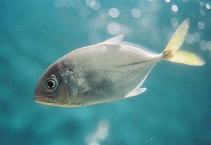
Caranx latus, Horse-eye jack : fisheries, gamefish, aquarium
> Carangiformes (Jacks) > Carangidae (Jacks and pompanos) > Caranginae
Etymology: Caranx:French, carangue, the name of a Caribbean fish; 1836 (Ref. 45335). More on author: Agassiz.
Entorno: milieu / zona climática / rango de profundidad / gama de distribución Ecología
marino; agua dulce; salobre asociado a arrecife; oceano-estuarine (Ref. 4233); rango de profundidad 0 - 140 m (Ref. 36484), usually 0 - 20 m (Ref. 40849). Subtropical; 41°N - 23°S, 98°W - 14°E
Western Atlantic: New Jersey (USA), Bermuda, and northern Gulf of Mexico to São Paulo, Brazil (Ref. 57756). Eastern Atlantic: St. Paul's Rocks (Ref. 13121), Ascension Island, and two confirmed records from the Gulf of Guinea (Ref. 7097).
Longitud en la primera madurez / Tamaño / Peso / Edad
Madurez: Lm37.0, range 34 - ? cm Max length : 101 cm FL macho / no sexado; (Ref. 40637); common length : 60.0 cm TL macho / no sexado; (Ref. 5217); peso máximo publicado: 13.4 kg (Ref. 40637)
Espinas dorsales (total) : 8 - 9; Radios blandos dorsales (total) : 20 - 22; Espinas anales: 2 - 3; Radios blandos anales: 16 - 17. Diagnosis: chest fully scaled (Ref. 81654). No spots on pectoral fins, spot posteriorly on gill cover small or absent; scutes tend to be dusky or blackish; caudal fin yellow; young with broad blackish bars on body (Ref. 13442). Body shape (shape guide): fusiform / normal.
A pelagic (Ref. 26340) schooling species usually found in offshore reefs (Ref. 9710). Juveniles are encountered along shores of sandy beaches, also over muddy bottoms (Ref. 9626). May penetrate into brackish water and ascend rivers. Adults feed on fishes, shrimps, and other invertebrates (Ref. 3277). Often approach divers (Ref. 9710). Eggs are pelagic (Ref. 4233).
Fisiología Composición corporal Nutrientes Consumo del oxígeno Tipo de natación Velocidad de natación Pigmentos visuales Sonido de peces Enfermedades y parásitos Toxicidad (CL50)