



Pellona castelnaeana Valenciennes, 1847
Amazon pellona
Envoyez vos Photos et vidéos
Images | Images Google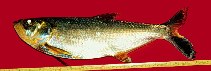 Pellona castelnaeana
Photo de Fundacion Puerto Rastrojo
Images | Images Google
Photo de Fundacion Puerto Rastrojo
Classification / Noms Noms communs | Synonymes | Catalog of Fishes(Genre, Espèce) | ITIS | CoL | WoRMS | Cloffa
> Clupeiformes (Herrings) > Pristigasteridae (Pristigasterids)
Etymology: Pellona: Derived from Latin, pellis = skin (Ref. 45335).
Eponymy: Francis(co) Louis Nompar de Caumont, Comte de Laporte de Castelnau (1810–1880) was a career diplomat and naturalist who was born in London, studied natural science in Paris, and then led a French scientific expedition to study the lakes of Canada, [...] (Ref. 128868), visit book page.
More on author: Valenciennes.
Etymology: Pellona: Derived from Latin, pellis = skin (Ref. 45335).
Eponymy: Francis(co) Louis Nompar de Caumont, Comte de Laporte de Castelnau (1810–1880) was a career diplomat and naturalist who was born in London, studied natural science in Paris, and then led a French scientific expedition to study the lakes of Canada, [...] (Ref. 128868), visit book page.
More on author: Valenciennes.
Environnement : milieu / zone climatique / profondeur / gamme de distribution Écologie
; eau douce; saumâtre pélagique. Tropical; 0°S - 13°S
Distribution Territoires | Zones FAO | Écosystèmes | Occurrences | Carte par point | Introductions | Faunafri
South America: Amazon system (Iquitos on Peruvian Amazon and Ambyiacos River in Ecuador to Manáos and perhaps Pará), the Guianas (Lake Amuku area where the Amazon and Essequibo systems join in wet years).
Taille / Poids / Âge
Maturité: Lm ? range ? - ? cm
Max length : 80.0 cm FL mâle / non sexé; (Ref. 40637); poids max. publié: 7.1 kg (Ref. 40637)
Max length : 80.0 cm FL mâle / non sexé; (Ref. 40637); poids max. publié: 7.1 kg (Ref. 40637)
Description synthétique Clés d'identification | Morphologie | Morphométrie
Épines dorsales (Total) : 0; Rayons mous dorsaux (Total) : 0; Épines anales: 0; Rayons mous anaux: 34 - 38. Belly with 23 or 24 + 8 to 11, total 33 or 34 scutes. Lower jaw projecting; upper jaw with a toothed hypo-maxillary bone between hind tip of pre-maxilla and lower bulge of maxilla blade; lower gill rakers 12 to 14 (in fishes of 20 to 50 cm standard length). Pelvic fins with a distinct axillary scale; anal fin long, its origin under dorsal fin base. Scales fairly small.
Body shape (shape guide): fusiform / normal; Cross section: compressed.
Body shape (shape guide): fusiform / normal; Cross section: compressed.
Occurs in rivers, apparently not entering the sea, although presumably tolerating at least some salinity at the Amazon mouth. More data needed.
Cycle de vie et comportement reproducteur Maturité | Reproduction | Frai | Œufs | Fécondité | Larves
Référence principale
Téléchargez vos références | Références | Coordinateur | Collaborateurs
Whitehead, P.J.P., 1985. FAO Species Catalogue. Vol. 7. Clupeoid fishes of the world (suborder Clupeoidei). An annotated and illustrated catalogue of the herrings, sardines, pilchards, sprats, shads, anchovies and wolf-herrings. FAO Fish. Synop. 125(7/1):1-303. Rome: FAO. (Ref. 188)
Statut dans la liste rouge de l'IUCN (Ref. 130435: Version 2025-2 (Global))
Préoccupation mineure (LC) ; Date assessed: 04 November 2020
CITES
Not Evaluated
Menace pour l'homme
Harmless
Utilisations par l'homme
Pêcheries: pêcheries vivrières; pêche sportive: oui
FAO - Publication: search | FishSource |
Plus d'informations
Écologie trophique
Aliments (proies)
Composition du régime alimentaire
Consommation alimentaire
Rations alimentaires
Prédateurs
Aliments (proies)
Composition du régime alimentaire
Consommation alimentaire
Rations alimentaires
Prédateurs
Dynamique des populations
Paramètres de croissance
Âges / tailles maximales
Longueur-poids rel.
Rel. longueur-longueur.
Fréquences de longueurs
Conversion de masse
Recrutement
Abondance
Paramètres de croissance
Âges / tailles maximales
Longueur-poids rel.
Rel. longueur-longueur.
Fréquences de longueurs
Conversion de masse
Recrutement
Abondance
Cycle de vie
Reproduction
Maturité
Maturité/épines rel.
Fécondité
Frai
Agrégats de frai
Œufs
Développement de l'œuf
Larves
Dynamique des populations larvaires
Reproduction
Maturité
Maturité/épines rel.
Fécondité
Frai
Agrégats de frai
Œufs
Développement de l'œuf
Larves
Dynamique des populations larvaires
Anatomie
Surface branchiale
Cerveau
Otolithe
Surface branchiale
Cerveau
Otolithe
Physiologie
Composition corporelle
Nutriments
Consommation d'oxygène
Type de natation
Vitesse de nage
Pigments visuels
Son de poisson
Maladies et parasites
Toxicité (CL50)
Composition corporelle
Nutriments
Consommation d'oxygène
Type de natation
Vitesse de nage
Pigments visuels
Son de poisson
Maladies et parasites
Toxicité (CL50)
Génétique
génôme
Génétique
Hétérozygotie
Héritabilité
Diversité génétique
génôme
Génétique
Hétérozygotie
Héritabilité
Diversité génétique
Liées à l'homme
Systèmes d'aquaculture
Profils d'aquaculture
Souches
Cas de ciguatera
Timbres, pièces de monnaie, divers
Systèmes d'aquaculture
Profils d'aquaculture
Souches
Cas de ciguatera
Timbres, pièces de monnaie, divers
Outils
E-book | Guide de terrain | Clés d'identification | Générateur de fréquences de longueur | Outil de dynamique de population | Carte par point |
Capture-MSY |
Articles particuliers
Télécharger en XML
Sources Internet
AFORO (otoliths) | Aquatic Commons | BHL | Cloffa | Websites from users | FishWatcher | CISTI | Catalog of Fishes: Genre, Espèce | DiscoverLife | ECOTOX | FAO - Publication: search | Faunafri | Fishipedia | Fishtrace | GloBI | Google Books | Google Scholar | Google | IGFA World Record | OneZoom | Open Tree of Life | Otolith Atlas of Taiwan Fishes | PubMed | Reef Life Survey | Socotra Atlas | TreeBase | Arbre de Vie | Wikipedia: aller à, chercher | World Records Freshwater Fishing | Zoobank | Zoological Record
Estimations basées sur des modèles
Indice de diversité phylogénétique (Réf. 82804): PD50 = 0.5156 [Uniqueness, from 0.5 = low to 2.0 = high].
Bayesian length-weight: a=0.00955 (0.00581 - 0.01569), b=3.08 (2.94 - 3.22), in cm total length, based on LWR estimates for this species & (Sub)family-body (Ref. 93245).
Niveau trophique (Réf. 69278): 3.7 ±0.56 se; based on food items.
Résilience (Réf. 120179): Milieu, temps minimum de doublement de population : 1,4 à 4,4 années (Preliminary K or Fecundity.).