



Oreochromis leucostictus (Trewavas, 1933)
Blue spotted tilapia
อัพโหลดของคุณ ภาพถ่าย และ วิดีโอ
รูปภาพหลายรูป | Google image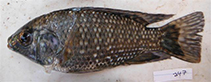 Oreochromis leucostictus
Male ภาพโดย Turner, G.F.
รูปภาพหลายรูป | Google image
Male ภาพโดย Turner, G.F.
การจำแนกประเภท / ชื่อ ชื่อสามัญ | ชื่อพ้อง | Catalog of Fishes(สกุล, ชนิด) | ITIS | CoL | WoRMS | Cloffa
> Cichliformes (Cichlids, convict blennies) > Cichlidae (Cichlids) > Pseudocrenilabrinae
Etymology: Oreochromis: Latin, aurum = gold + Greek, chromis = a fish, perhaps a perch (Ref. 45335); leucostictus: From the Greek "leukostiktos" = with white spots, referring to the white spotted color pattern of this species (Ref. 55074).
More on author: Trewavas.
Etymology: Oreochromis: Latin, aurum = gold + Greek, chromis = a fish, perhaps a perch (Ref. 45335); leucostictus: From the Greek "leukostiktos" = with white spots, referring to the white spotted color pattern of this species (Ref. 55074).
More on author: Trewavas.
Taxonomic Remarks
Species also referred to as Tilapia nigra x T. zillii (Ref. 5166).
สิ่งแวดล้อม : สิ่งแวดล้อม / เขตภูมิอากาศ / ระดับความลึก / ระยะการกระจายสินค้า นิเวศวิทยา
; น้ำจืด กลุ่มสัตว์หน้าดิน,กลุ่มสัตว์พื้นท้องน้ำ; pH range: 7.0 - 9.0; dH range: 10 - ?; ระดับความลึก 0 - 10 m (Ref. 34291). Tropical; 26°C - 28°C (Ref. 2060); 2°N - 2°S
การแพร่กระจาย อาณาเขต | พื้นที่จำแนกตาม FAO | ระบบนิเวศหลายระบบ | การปรากฏขึ้น,การเกิดขึ้น,พบ | ตำแหน่งบนแผนที่ | การแนะนำ | Faunafri
Africa: Lakes Edward, George and Albert and affluent rivers and streams of these lakes and of the Semliki River (Ref. 5166). Also in tributaries of the Aswa River where it is not certain whether it occurs naturally or has been introduced (Ref. 5166, 34290). Introduced from Lake Albert to Lake Victoria and fish ponds in catchment (Ref. 1739, 4967); also introduced in Lake Kivu (Ref. 107916). Several countries report adverse ecological impact after introduction.
ความยาวเมื่อครบกำหนดครั้งแรก / ขนาด / น้ำหนัก / อายุ
คำอธิบายสั้นๆ เครื่องมือที่ใช้ในการแยกชนิดสัตว์,สิ่งมีชีวิตออกจากกัน | สัณฐานวิทยา | ความยาวต่างๆ
เงี่ยงครีบหลัง (รวม) : 15 - 18; ก้านครีบอ่อนที่หาง (รวม) : 10 - 13; เงี่ยงครีบก้น: 3 - 4; ก้านครีบอ่อนที่ก้น: 9 - 11; สัตว์มีกระดูกสันหลัง: 27 - 29. Diagnosis: A small medium-sized tilapia, with a relatively deep, flattened body and small head and jaws (Ref. 118638). Lower jaw not longer than 34% of the head, preorbital depth not more than 23.2%; teeth of jaws and pharynx very small, those of the lower pharyngeal restricted to the posterior part of the pad; 27-29 vertebrae (Ref. 2). Scales on lateral line 28-30 (Ref. 2, 34290, 54836), rarely 31 or 32 (Ref. 2). Gill-rakers on lower part of first gill-arch 19-24 (Ref. 34290, 54836). Length/depth ratio of caudal peduncle 0.5-0.8 (Ref. 34290). Males are black with white spots on the flanks and fins; females are more olive coloured, with pale ventral regions, faint vertical barring and dark anal and tail fins (Ref. 2, 4903, 34290, 118638). Lower lip often bluish-white; 8 to 12 dark vertical stripes sometimes visible on flanks (Ref. 2, 4903, 34290). Dorsal, anal and caudal fins dark; soft dorsal, entire caudal and anal fins with well-defined bluish-white spots (Ref. 4903, 34290). Genital papilla intensely white in both sexes (Ref. 2). Ground color in breeding males changes to dark blue-black, whilst whitish spots on body and fins are intensified; eye outstanding with its bright amber iris crossed by a black bar (Ref. 2, 4903, 34290).
Body shape (shape guide): fusiform / normal; Cross section: compressed.
Body shape (shape guide): fusiform / normal; Cross section: compressed.
Occupies an inshore zone and is common in lagoons (Ref. 87). Occasionally forms schools (Ref. 2, 39939). Is mainly diurnal (Ref. 2). Can tolerate considerable deoxygenation (Ref. 2, 1739, 4903, 13046, 32297) and warm temperatures (Ref. 2060), known to occur at 38.0 °C (Ref. 2). Feeds on phytoplankton (Ref. 2, 21, 4903, 34291, 55486) and detritus (Ref. 34291, 55486, 56058). Ovophilic (Ref. 2060), a maternal mouthbrooder (Ref. 4903, 34291, 55074, 118638). Males dig simple pits in shallow water (Ref. 118638). Strongly prone to precocious maturity; this makes it an undesirable aquaculture species (Ref. 118638). Caught in large numbers by small-meshed nets in shallow swampy areas, where it has become established (Ref. 118638). When stocked along with Nile tilapia, probably will assist in filling all suitable niches and competitively excluding native species (Ref. 118638).
วงจรชีวิตและพฤติกรรมการผสมพันธุ์ วัยเจริญพันธุ์ | การสืบพันธุ์ | การวางไข่ | เซลสืบพันธ์ของเพศเมีย(ไข่) | ความดกของไข่ | ตัวอ่อน
Breeds over shallow muddy bottoms in sheltered inlets and in the papyrus fringe (Ref. 56123). Ripe males are found near the bottom over particular nesting areas (Ref. 39939). Males establish territory and make a nest by mouth-digging (Ref. 2), actively preventing invasion by other fishes (Ref. 39939). Nests made in shallow water, 15-300cm deep (Ref. 2, 56123), 16-20cm in diameter and 1-4m apart, dug in coarse leaf-debris or on shallow muddy bottoms (Ref. 2, 39939). Brooding females from the lagoons are found in pools adjacent to the lagoons/nursery swamps (Ref. 2, 39939). Fry spent their early days in shallow, grassy (Ref. 2, 32297, 39939) and deoxygenated swamps (Ref. 56123), but move to deeper water as their length increases (Ref. 32297, 39939).
อ้างอิงหลัก
อัพโหลดข้อมูลอ้างอิงของคุณ | อ้างอิง | ผู้ประสานงาน : Kullander, Sven O. | ผู้ร่วมมือ
Trewavas, E., 1983. Tilapiine fishes of the genera Sarotherodon, Oreochromis and Danakilia. British Mus. Nat. Hist., London, UK. 583 p. (Ref. 2)
สถานะบัญชีแดงของ IUCN (Ref. 130435: Version 2025-2 (Global))
Least Concern (LC) ; Date assessed: 30 March 2021
CITES
Not Evaluated
ภัยคุกคามต่อมนุษย์
Potential pest (Ref. 13364)
การใช้ของมนุษย์
การเพาะเลี้ยงสัตว์น้ำ: การทดลอง; สถานที่แสดงสัตว์และพืชน้ำ: การค้า
FAO - Publication: search | FishSource |
ข้อมูลเพิ่มเติม
พลวัตของประชากร
พารามิเตอร์การเจริญเติบโต
อายุสูงสุด / ขนาด
ความยาว-น้ำหนักสัมพันธ์
ความยาว-ความยาวสัมพันธ์
ความยาว-ความถี่
การแปลงมวล
การทดแทนที่
อุดมสมบรูณ์
พารามิเตอร์การเจริญเติบโต
อายุสูงสุด / ขนาด
ความยาว-น้ำหนักสัมพันธ์
ความยาว-ความยาวสัมพันธ์
ความยาว-ความถี่
การแปลงมวล
การทดแทนที่
อุดมสมบรูณ์
วงจรชีวิต
การสืบพันธุ์
วัยเจริญพันธุ์
ความสมบูรณ์พันธุ์/เหงือกที่เกี่ยวข้อง
ความดกของไข่
การวางไข่
การรวมตัวของสปอน
เซลสืบพันธ์ของเพศเมีย(ไข่)
การพัฒนาไข่
ตัวอ่อน
พลวัตของสัตว์น้ำวัยอ่อน
การสืบพันธุ์
วัยเจริญพันธุ์
ความสมบูรณ์พันธุ์/เหงือกที่เกี่ยวข้อง
ความดกของไข่
การวางไข่
การรวมตัวของสปอน
เซลสืบพันธ์ของเพศเมีย(ไข่)
การพัฒนาไข่
ตัวอ่อน
พลวัตของสัตว์น้ำวัยอ่อน
การแพร่กระจาย
อาณาเขต
พื้นที่จำแนกตาม FAO
ระบบนิเวศหลายระบบ
การปรากฏขึ้น,การเกิดขึ้น,พบ
การแนะนำ
BRUVS - วิดีโอ
อาณาเขต
พื้นที่จำแนกตาม FAO
ระบบนิเวศหลายระบบ
การปรากฏขึ้น,การเกิดขึ้น,พบ
การแนะนำ
BRUVS - วิดีโอ
กายวิภาคศาสตร์
พื้นที่เหงือก
สมอง
หินโสต
พื้นที่เหงือก
สมอง
หินโสต
สรีรวิทยา
องค์ประกอบของร่างกาย
สารอาหาร
การใช้ออกซิเจน
ประเภทการว่ายน้ำ
ระดับความเร็วในการว่ายน้ำ
เม็ดสีที่มองเห็นได้
เสียงปลา
โรคและปรสิต
ความเป็นพิษ (LC50s)
องค์ประกอบของร่างกาย
สารอาหาร
การใช้ออกซิเจน
ประเภทการว่ายน้ำ
ระดับความเร็วในการว่ายน้ำ
เม็ดสีที่มองเห็นได้
เสียงปลา
โรคและปรสิต
ความเป็นพิษ (LC50s)
เกี่ยวข้องกับมนุษย์
ระบบการเพาะเลี้ยงสัตว์น้ำ
ประวัติการเพาะเลี้ยงสัตว์น้ำ
สายพันธุ์
กรณีซิเกวเทอรา
แสตมป์ เหรียญ อื่นๆ
ระบบการเพาะเลี้ยงสัตว์น้ำ
ประวัติการเพาะเลี้ยงสัตว์น้ำ
สายพันธุ์
กรณีซิเกวเทอรา
แสตมป์ เหรียญ อื่นๆ
เครื่องมือ
หนังสืออิเล็กทรอนิกส์ | คู่มือภาคสนาม | ผู้มีความชำนาญในเรื่องความถี่ของความยาว | เครื่องมือในการศึกษาชีวประวัติ | ตำแหน่งบนแผนที่ |
จับ-MSY |
รายงานพิเศษ
ตรวจสอบการบำรุงรักษาตู้ปลา | ตรวจสอบเอกสารข้อเท็จจริงเกี่ยวกับสายพันธุ์ | ตรวจสอบเอกสารข้อเท็จจริงเกี่ยวกับการเพาะเลี้ยงสัตว์น้ำ
ดาวน์โหลด XML
หน้าสรุป | ข้อมูลสำคัญ | ชื่อสามัญ | ภาพถ่าย
แหล่งที่มาจากอินเตอร์เน็ต
AFORO (otoliths) | Alien/Invasive Species database | Aquatic Commons | BHL | Cloffa | Websites from users | Check FishWatcher | CISTI | Catalog of Fishes: สกุล, ชนิด | DiscoverLife | ECOTOX | FAO - Publication: search | Faunafri | Fishipedia | Fishtrace | GloBI | Google Books | Google Scholar | Google | IGFA World Record | OneZoom | Open Tree of Life | Otolith Atlas of Taiwan Fishes | PubMed | Reef Life Survey | Socotra Atlas | TreeBase | แผนภูมิชีวิตแบบต้นไม้ | Wikipedia: Go, ค้นหา | World Records Freshwater Fishing | บันทึกทางด้านสัตววิทยา
การประมาณค่าตามแบบจำลอง
ดัชนีความหลากหลายทางวิวัฒนาการ (อ้างอิง 82804): PD50 = 0.5000 [Uniqueness, from 0.5 = low to 2.0 = high].
Bayesian length-weight: a=0.01318 (0.00710 - 0.02446), b=2.99 (2.84 - 3.14), in cm total length, based on LWR estimates for this species & Genus-body shape (Ref. 93245).
ระดับชั้นอาหาร (อ้างอิง 69278): 2.3 ±0.14 se; based on food items.
Generation time: 1.8 ( na - na) years. Estimated as median ln(3)/K based on 1 growth studies.
ความสามารถในการกลับคืนสู่ปกติ (อ้างอิง 120179): ขนาดกลาง, เวลาต่ำสุดที่จะทำให้ประชากรเพิ่มขึ้นเป็น 2 เท่าใช้เวลา 1.4 - 4.4 ปี (K=0.63; assumed tmax>2).