



Megalechis picta (Müller & Troschel, 1849)
Spotted hoplo
Ανεβάστε το φωτογραφίες και Βίντεο
Φωτογραφίες | Google image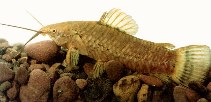 Megalechis picta
Εικόνα από Galvis, G./Mojica, J.I./Camargo, M.
Φωτογραφίες | Google image
Εικόνα από Galvis, G./Mojica, J.I./Camargo, M.
Ταξινόμηση / Ονόματα Κοινά ονόματα | Συνώνυμα | Catalog of Fishes(Γένος, Είδη) | ITIS | CoL | WoRMS | Cloffa
> Siluriformes (Catfishes) > Callichthyidae (Callichthyid armored catfishes) > Callichthyinae
Etymology: Megalechis: Greek, megas, megalos = great + greek, echis, -eos = viper (Ref. 45335).
More on authors: Müller & Troschel.
Etymology: Megalechis: Greek, megas, megalos = great + greek, echis, -eos = viper (Ref. 45335).
More on authors: Müller & Troschel.
Taxonomic Remarks
See Reis (1997) for phylogeny and Reis (1998) for detailed description.
Περιβάλλον: περιβάλλον / κλιματική ζώνη / εύρος βάθους / εύρος διανομής Οικολογία
; Γλυκού νερού βενθικό(ς); pH range: 6.0 - 8.0; dH range: 5 - 19. Tropical; 18°C - 28°C (Ref. 1672)
Κατανομή Εδάφη | Περιοχές FAO | Οικοσυστήματα | Παρουσίες | Σημειακός χάρτης | Εισαγωγές | Faunafri
South America: Amazon and Orinoco River basins, as well as coastal rivers of the Guianas and northern Brazil.
Μέγεθος / Βάρος / Ηλικία
Γεννητική Ωρίμανση: Lm ? range ? - ? cm
Max length : 17.0 cm SL αρσενικό/απροσδιόριστο; (Ref. 121647); μεγ. δημοσιευμένο βάρος: 350.00 g (Ref. 27188)
Max length : 17.0 cm SL αρσενικό/απροσδιόριστο; (Ref. 121647); μεγ. δημοσιευμένο βάρος: 350.00 g (Ref. 27188)
Obligate air-breathing (Ref. 126274); Ubiquitous (Ref. 35381). Occurs in ponds (Ref. 11229), swamps and flooded savanna. May also occur in inland creeks with strong current. When the swamps are drained during the dry season, they burrow in the mud at a depth of 15-25 cm and remain there until the first rains. They hide only at the bottom of the marshes which remain always a little muddy even during the dry season. Today, they are presently captured with the net. Previously, fishermen drained the marshes in order to unearth the fish which had hidden there (Ref. 27188). Omnivore (Ref. 26543). Intestinal breathing, complementary to branchial breathing, enables them to adapt to extreme hypoxic conditions which occur in their biotopes. For these reasons, the relevant intestinal zone has a more reduced mucus epithelium as well as an increased blood system. In the dry season when swamps get dry, they sink deeper into the muddy substrate down to a depth of 20 cm. This way, they live at a slower pace, often in groups, until the next rainy season. At the end of October, the fishermen dig them up because they are appreciated for their flesh. At other times, they are fished with nets (Ref. 35381).
Κύκλος ζωής και συμπεριφορά ζευγαρώματος Γεννητική Ωρίμανση | Αναπαραγωγή | Γεννοβολία | Αβγά | Γονιμότητα | Προνύμφες
Male builds nests in shallow swamps or swamp forests during the rainy season.
Κύρια αναφορά
Ανεβάστε τις αναφορές σας | Αναφορές | Συντονιστής : Reis, Roberto E. | Συνεργάτες
Reis, R.E., P.-Y. Le Bail and J.H.A. Mol, 2005. New arrangement in the synonymy of Megalechis Reis, 1997 (Siluriformes: Callichthyidae). Copeia 2005(3):678-682. (Ref. 57766)
Κατάσταση Κόκκινου Καταλόγου IUCN (Ref. 130435: Version 2025-2 (Global))
Least Concern (LC) ; Date assessed: 20 October 2020
CITES
Not Evaluated
Απειλή για τον άνθρωπο
Harmless
Ανθρώπινες χρήσεις
αλιεία: περιορισμένης εμπορικότητας; Ενυδρείο: Εμπορικό(ά)
FAO - Publication: search | FishSource |
Περισσότερες πληροφορίες
Πληθυσμιακή δυναμική
Παράμετροι Αύξησης
Μέγιστες ηλικίες / μεγέθη
Μήκος-βάρος σχετ.
Μήκος-μήκος rel.
Μήκος-συχνότητες
Μετατροπή μάζας
Στρατολόγηση
Αφθονία
Παράμετροι Αύξησης
Μέγιστες ηλικίες / μεγέθη
Μήκος-βάρος σχετ.
Μήκος-μήκος rel.
Μήκος-συχνότητες
Μετατροπή μάζας
Στρατολόγηση
Αφθονία
Κύκλος ζωής
Αναπαραγωγή
Γεννητική Ωρίμανση
Ωριμότητα / Gills rel.
Γονιμότητα
Γεννοβολία
Συγκεντρώσεις αναπαραγωγής
Αβγά
Ανάπτυξη αυγών
Προνύμφες
Δυναμική προνυμφών
Αναπαραγωγή
Γεννητική Ωρίμανση
Ωριμότητα / Gills rel.
Γονιμότητα
Γεννοβολία
Συγκεντρώσεις αναπαραγωγής
Αβγά
Ανάπτυξη αυγών
Προνύμφες
Δυναμική προνυμφών
Ανατομία
Επιφάνεια βραγχίων
Εγκέφαλος
Ωτόλιθος
Επιφάνεια βραγχίων
Εγκέφαλος
Ωτόλιθος
Φυσιολογία
Σύνθεση σώματος
Θρεπτικά συστατικά
Κατανάλωση οξυγόνου
Τύπος κολύμβησης
Ταχύτητα κολύμβησης
Οπτικές χρωστικές ουσίες
Ήχος ψαριών
Ασθένειες & παράσιτα
Τοξικότητα (LC50)
Σύνθεση σώματος
Θρεπτικά συστατικά
Κατανάλωση οξυγόνου
Τύπος κολύμβησης
Ταχύτητα κολύμβησης
Οπτικές χρωστικές ουσίες
Ήχος ψαριών
Ασθένειες & παράσιτα
Τοξικότητα (LC50)
Ανθρώπινη σχέση
Συστήματα υδατοκαλλιέργειας
Προφίλ υδατοκαλλιεργειών
Στελέχοι
Περιπτώσεις Ciguatera
Γραμματόσημα, νομίσματα, διάφορα.
Συστήματα υδατοκαλλιέργειας
Προφίλ υδατοκαλλιεργειών
Στελέχοι
Περιπτώσεις Ciguatera
Γραμματόσημα, νομίσματα, διάφορα.
Εργαλεία
Βιολογικό κουίζ | Ηλεκτρονικό βιβλίο | Οδηγός πεδίου | Ανάλυση κατά μήκος συνθέσεων | Εργαλείο ιστορίας ζωής | Σημειακός χάρτης |
Catch-MSY |
Ειδικές εκθέσεις
Έλεγχος για συντήρηση ενυδρείου | Ελέγξτε για ενημερωτικά δελτία ειδών | Ελέγξτε για ενημερωτικά δελτία υδατοκαλλιέργειας
Λήψη XML
Διαδικτυακές πηγές
AFORO (otoliths) | Aquatic Commons | BHL | Cloffa | Websites from users | Check FishWatcher | CISTI | Catalog of Fishes: Γένος, Είδη | DiscoverLife | ECOTOX | FAO - Publication: search | Faunafri | Fishipedia | Fishtrace | GloBI | Google Books | Google Scholar | Google | IGFA World Record | OneZoom | Open Tree of Life | Otolith Atlas of Taiwan Fishes | Δημόσια ενυδρεία | PubMed | Reef Life Survey | Socotra Atlas | TreeBase | Δέντρο Ζωής | Wikipedia: Go, αναζήτηση | World Records Freshwater Fishing | Zoological Record
Εκτιμήσεις βάσει μοντέλων
Δείκτης φυλογενετικής ποικιλότητας (Αναφ. 82804): PD50 = 0.7500 [Uniqueness, from 0.5 = low to 2.0 = high].
Bayesian length-weight: a=0.02455 (0.01242 - 0.04852), b=2.96 (2.78 - 3.14), in cm total length, based on LWR estimates for this species & (Sub)family-body (Ref. 93245).
Τροφικό Επίπεδο (Αναφ. 69278): 3.0 ±0.0 se; based on diet studies.
Ελαστικότητα (Αναφ. 120179): Υψηλό, ελάχιστος χρόνος για διπλασιασμό πληθυσμού < 15 μήνες (Preliminary K or Fecundity.).