Common names from other countries
分類 / 名前
共通名の | 類義語 | Catalog of Fishes(部類, 種) | ITIS | CoL | WoRMS | Cloffa
>
Scombriformes (Mackerels) >
Scombridae (Mackerels, tunas, bonitos) > Scombrinae
Etymology: Scomber: Greek, skombros = tunny or mackerel, 1623 (Ref. 45335); japonicus: Named after Japan, its type locality (Ref. 6885).
環境:環境 / 気候帯 / 深さの範囲 / 分布範囲
生態学
海 pelagic-neritic; 海洋回遊性 (Ref. 87829); 深さの範囲 0 - 300 m (Ref. 168), usually 50 - 200 m (Ref. 35185). Subtropical; 10°C - 27°C (Ref. 35185); 60°N - 48°S, 116°E - 70°W
Indo-Pacific: anti-tropical, absent from the Indian Ocean except for South Africa, KZN to Western Cape (58304).
Reports from Atlantic incl. Mediterranean are Scomber colias, and from Red Sea and northern Indian Ocean are Scomber australasicus (Ref. 27328).
初回成熟時の長さ / サイズ / 重さ / 年齢
成熟: Lm 26.1 range ? - ? cm
Max length : 64.0 cm TL オス/雌雄の選別がない; (Ref. 9015); common length : 30.0 cm FL オス/雌雄の選別がない; (Ref. 168); 最大公表体重: 2.9 kg (Ref. 26550); 最大記録サイズ: 18 年 (Ref. 35185)
背面の脊椎 (合計) : 9 - 11; 背鰭 (合計) : 11 - 12; 肛門の骨: 1; 臀鰭: 12 - 14; 脊つい: 31. Interpelvic process small and single. No well developed corselet. Swim bladder present. First haemal spine posterior to first interneural process; 12 to 15 interneural bones under first dorsal fin. Anal fin spine conspicuous, clearly separated from anal rays but joined to them by a membrane. Back with narrow stripes which zigzag and undulate. Belly unmarked (Pacific population) or with wavy lines (Atlantic pop.) (Ref. 168). Caudal peduncle with 5 finlets on the upper and lower edge. Distance between dorsal fins shorter than or equal to the first dorsal fin base (Ref. 35388).
Body shape (shape guide): fusiform / normal; Cross section: oval.
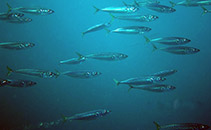
A coastal pelagic species, to a lesser extent epipelagic to mesopelagic over the continental slope (Ref. 168). Are considered as straddling stock in the eastern central Pacific (Ref. 87829). Schooling by size is well developed and initiates at approximately 3 cm (Ref. 168); may also form schools with Sarda chiliensis, Trachurus symmetricus and Sardinops sagax (Ref. 9340). Adults stay near the bottom during the day; go up to the open water at night, (Ref. 5377) where they feed on copepods and other crustaceans, fishes and squids (Ref. 168). They spawn in batches (Ref. 51846). Eggs and larvae are pelagic (Ref. 6769). In Asian waters, they move to deeper water and remain inactive during the winter season (Ref. 4576). Commercially cultured in Japan. Marketed fresh, frozen, smoked, salted and occasionally canned (Ref. 9684). Eaten fried, broiled and baked (Ref. 9988). Used in Chinese medicine (Ref. 12166).
ライフサイクルと交尾行動
成熟 | 繁殖 | 放精 | 卵 | 生産力 | 幼生
Spawning most often occurs at water temperatures of 15° to 20°C. Spawn in several batches with 250 to 300 eggs per g of fish with the total number of eggs per female ranging from 100,000 to 400,000.
Collette, B.B. and C.E. Nauen, 1983. FAO Species Catalogue. Vol. 2. Scombrids of the world. An annotated and illustrated catalogue of tunas, mackerels, bonitos and related species known to date. Rome: FAO. FAO Fish. Synop. 125(2):137 p. (Ref. 168)
IUCNのレッドリストの状況は (Ref. 130435: Version 2025-2 (Global))
人間の用途
水産業: 高い商業の; 水産養殖: 商業; ゲームフィッシュ: はい; 餌: usually
用具
特記事項
XMLをダウンロードして下さい
インターネットの情報源
モデルに基づく推定値
好ましい温度 (参照
123201): 9.3 - 27.7, mean 20.7 °C (based on 1526 cells).
系統多様性指数 (参照
82804): PD
50 = 0.5625 [Uniqueness, from 0.5 = low to 2.0 = high].
Bayesian length-weight: a=0.00741 (0.00663 - 0.00828), b=3.05 (3.02 - 3.08), in cm total length, based on LWR estimates for this species (Ref.
93245).
栄養段階 (参照
69278): 3.4 ±0.1 se; based on diet studies.
Generation time: 3.6 (3.1 - 5.0) years. Estimated as median ln(3)/K based on 24
growth studies.
回復力 (参照
120179): 手段, 1.4年~4.4年の倍増期間の最小個体群 (K=0.12-0.22; tm=2-3; tmax=18).
Prior r = 0.35, 95% CL = 0.23 - 0.53, Based on 1 full stock assessment.
漁業の脆弱性 (Ref.
59153): Low to moderate vulnerability (31 of 100).
🛈
気候脆弱性 (Ref.
125649): Low vulnerability (24 of 100).
🛈
栄養素 (Ref.
124155): Calcium = 48.8 [16.2, 118.3] mg/100g; Iron = 2.18 [0.83, 5.26] mg/100g; Protein = 20.9 [19.8, 21.8] %; Omega3 = 0.358 [0.247, 0.525] g/100g; Selenium = 98.1 [37.9, 229.9] μg/100g; VitaminA = 13.7 [3.5, 60.5] μg/100g; Zinc = 0.846 [0.514, 1.358] mg/100g (wet weight); based on
nutrient studies.