Sardina pilchardus, European pilchard : fisheries

You can sponsor this page

Sardina pilchardus (Walbaum, 1792)

European pilchard
Waarneming toevoegen in Fish Watcher
Native range | All suitable habitat | Point map | Year 2050
This map was computer-generated and has not yet been reviewed.
Sardina pilchardus   AquaMaps   Data sources: GBIF OBIS
Uploaden van uw Foto's en video's
Afbeeldingen | video's | Postzegels, munten, diversen. | Google afbeelding
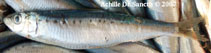
Image of Sardina pilchardus (European pilchard)
Sardina pilchardus
Afbeelding van De Sanctis, A.


Norway territory information

Common names: Sardin
Occurrence: native
Salinity: marine
Abundance: | Ref:
Importance: | Ref:
Aquaculture: | Ref:
Regulations: | Ref:
Uses: no uses
Comments:
National Checklist:
Territory Information: https://www.cia.gov/library/publications/resources/the-world-factbook/geos/no.html
National Fisheries Authority: http://odin.dep.no/fid/eng/
Occurrences: Occurrences Point map
Main Ref: Whitehead, P.J.P., 1985
National Database:

Common names from other countries

Classificatie / Namen Lokale namen | Synoniemen | Catalog of Fishes(Genus, Soort(en)) | ITIS | CoL | WoRMS | Cloffa

> Clupeiformes (Herrings) > Alosidae (Shads and Sardines)
Etymology: Sardina: Latin and Greek, sarda = sardine; name related to the island of Sardinia (Ref. 45335).
More on author: Walbaum.

Milieu: milieu / Klimaatzone / Diepte / verspreidingsgebied Ecologie

marien; brak water pelagic-neritic; oceanodroom (Ref. 51243); diepte 10 - 100 m (Ref. 5286), usually 25 - 100 m (Ref. 54866). Subtropical; 68°N - 14°N, 32°W - 43°E (Ref. 54866)

Verspreiding Gebieden | FAO regio's | Ecosystemen | Voorkomen | Verspreidingskaart | Introducties | Faunafri

Northeast Atlantic: Iceland (rare) and North Sea, southward to Bay de Gorée, Senegal. Mediterranean (common in the western part and in Adriatic Sea, rare in the eastern part), Sea of Marmara and Black Sea.

Lengte bij maturiteit / Grootte / Gewicht / Leeftijd

Maturiteit: Lm 14.8  range ? - ? cm
Max length : 27.5 cm SL mannelijk / geslacht onbekend; (Ref. 74552); common length : 20.0 cm SL mannelijk / geslacht onbekend; (Ref. 188); max. gerapporteerde leeftijd: 15 Jaren (Ref. 35388)

Korte beschrijving Determinatiesleutels | Morfologie | Morfometrie

Dorsale stekels (totaal) : 0; Dorsale zachte stralen (totaal) : 13 - 21; Anale stekels: 0; Anale zachte stralen: 12 - 23. Body sub-cylindrical, belly rather rounded (but more compressed in juveniles). Hind margin of gill opening smoothly rounded (without fleshy outgrowths) ; 3 to 5 distinct body striae radiating downward on lower part of operculum; lower gill rakers not becoming shorter at angle of first gill arch, the upper series not overlapping the lower. Last 2 anal fin rays enlarged.
Body shape (shape guide): fusiform / normal; Cross section: compressed.

Biologie     Verklarende woordenlijst (bv. epibenthic)

A coastal, pelagic species (Ref. 188). Form schools, usually at depths of 25 to 55 or even 100 m by day, rising to 10 to 35 m at night. Feed mainly on planktonic crustaceans, also on larger organisms. Spawn in batches (Ref. 51846), in the open sea or near the coast, producing 50,000-60,000 eggs with a mean diameter of 1.5 mm (Ref. 35388). Marketed fresh, frozen or canned. Also utilized dried or salted and smoked; can be pan-fried, broiled and microwaved (Ref. 9988).

Levenscyclus en paargedrag Maturiteit | Voortplanting | Paaien | Eieren | Fecunditeit | Larven

Breeds at 20 to 25 m, near the shore or as much as 100 km out to sea.

Hoofdreferentie Upload uw referenties | Referenties | Coördinator | Medewerkers

Whitehead, P.J.P., 1985. FAO Species Catalogue. Vol. 7. Clupeoid fishes of the world (suborder Clupeoidei). An annotated and illustrated catalogue of the herrings, sardines, pilchards, sprats, shads, anchovies and wolf-herrings. FAO Fish. Synop. 125(7/1):1-303. Rome: FAO. (Ref. 188)

Status op de Rode Lijst van het IUCN (Ref. 130435: Version 2025-2 (Global))

  Niet bedreigd (LC) ; Date assessed: 20 May 2013

CITES

Not Evaluated

CMS (Ref. 116361)

Not Evaluated

Gevaar voor de mens

  Harmless


Gebruik door de mens

Visserij: van groot commercieel belang
FAO - visserij: aanvoer, soortsprofiel; Publication: search | FIRMS - Stock assessments | FishSource | Sea Around Us

Meer informatie

Trofische ecologie
Voedsel (prooien)
Dieetsamenstelling
Voedselconsumptie
Voedselrantsoenen
Predatoren
Ecologie
Ecologie
Home ranges
Levenscyclus
Voortplanting
Maturiteit
Rijpheid/kieuwen rel.
Fecunditeit
Paaien
Paaibestanden
Eieren
Ontwikkeling van de eieren
Larven
Larvale populatiedynamiek
Verspreiding
Gebieden
FAO regio's
Ecosystemen
Voorkomen
Introducties
BRUVS - Video's
Anatomie
Kieuwoppervlak
Hersenen
Otoliet
Fysiologie
Lichaamssamenstelling
Voedingsstoffen
Zuurstofverbruik
Type zwemmen
Zwemsnelheid
Visuele pigmenten
Vis geluid
Ziekten en parasieten
Toxiciteit (LC50)
Genetica
genoom
Genetica
Heterozygositeit
Erfelijkheid
Menselijk gerelateerd
Aquacultuursystemen
Aquacultuurprofielen
Kweeklijnen
Ciguatera gevallen
Postzegels, munten, diversen.
Outreach
Medewerkers
Referenties
Referenties

Tools

Speciale rapporten

Download XML

Internetbronnen

AFORO (otoliths) | Aquatic Commons | BHL | Cloffa | Websites from users | Bekijk FishWatcher | CISTI | Catalog of Fishes: Genus, Soort(en) | DiscoverLife | DORIS | ECOTOX | FAO - visserij: aanvoer, soortsprofiel; Publication: search | Faunafri | Fishipedia | Fishtrace | GloBI | Google Books | Google Scholar | Google | IGFA World Record | Nationale databanken | OneZoom | Open Tree of Life | Otolith Atlas of Taiwan Fishes | Publieke aquaria | PubMed | Reef Life Survey | Socotra Atlas | TreeBase | Tree of Life | Wikipedia: ga naar, zoek | World Records Freshwater Fishing | Zoological Record

Schattingen op basis van modellen

Gewenste temperatuur (Ref. 123201): 7.1 - 17.3, mean 10.3 °C (based on 553 cells).
Fylogenetische diversiteitsindex (Ref. 82804):  PD50 = 1.0000   [Uniqueness, from 0.5 = low to 2.0 = high].
Bayesian length-weight: a=0.00631 (0.00554 - 0.00719), b=3.08 (3.04 - 3.12), in cm total length, based on LWR estimates for this species (Ref. 93245).
Trofisch niveau (Ref. 69278):  3.1   ±0.1 se; based on diet studies.
Generation time: 3.0 (2.7 - 3.2) years. Estimated as median ln(3)/K based on 58 growth studies.
Weerstandsvermogen (Ref. 120179):  Gemiddeld, minimale populatieverdubbelingstijd 1,4-4,4 jaar (K=0.23-0.5; tm=1-2; tmax=15).
Prior r = 0.63, 95% CL = 0.41 - 0.94, Based on 26 full stock assessments.
Kwetsbaarheid van de visserij (Ref. 59153):  Low to moderate vulnerability (30 of 100). 🛈
Kwetsbaarheid voor het klimaat (Ref. 125649):  Low vulnerability (22 of 100). 🛈
Prijsklasse (Ref. 80766):   Low.
Voedingsstoffen (Ref. 124155):  Calcium = 162 [75, 357] mg/100g; Iron = 2.61 [1.10, 5.76] mg/100g; Protein = 19.8 [18.6, 21.0] %; Omega3 = 1.07 [0.55, 2.10] g/100g; Selenium = 35.9 [18.2, 74.0] μg/100g; VitaminA = 14.5 [4.5, 48.3] μg/100g; Zinc = 1.42 [1.02, 2.25] mg/100g (wet weight); based on nutrient studies.