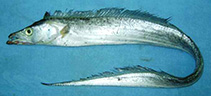
Trichiurus lepturus, Largehead hairtail : fisheries, gamefish
This page is sponsored by
Mundus Maris

Trichiurus lepturus Linnaeus, 1758

Largehead hairtail
ເພີ່ມ​ການ​ສັງ​ເກດ​ຂອງ​ທ່ານ​ໃນ​ Fish Watcher
Native range | All suitable habitat | Point map | Year 2050
This map was computer-generated and has not yet been reviewed.
Trichiurus lepturus   AquaMaps   Data sources: GBIF OBIS
ອັບໂຫລດຂອງທ່ານ ຮູບພາບ ແລະ ວິດີໂອ
ຮູບ | Google image
Image of Trichiurus lepturus (Largehead hairtail)
Trichiurus lepturus
ຮູບພາບໂດຍ Osmany, H.B.

Common names from other countries

ການຈັດປະເພດ / ຊື່ ຊື່ສາມັນ | ຄຳສັບຄ້າຍຄືກັນ | Catalog of Fishes(ຕະກຸນ, ຊະນິດ) | ITIS | CoL | WoRMS | Cloffa

> Scombriformes (Mackerels) > Trichiuridae (Cutlassfishes) > Trichiurinae
Etymology: Trichiurus: Greek, thrix = hair + Greek, oura = tail (Ref. 45335)lepturus: Specific name from Greek 'lepturus', for its thin or slender tail.
More on author: Linnaeus.

ສະພາບແວດລ້ອມ: ສະພາບແວດລ້ອມ / ເຂດ​ດິນ​ຟ້າ​ອາ​ກາດ​ / ລະດັບຄວາມເລິກ / ຂອບເຂດການແຈກຢາຍ ນິເວດວິທະຍາ

ສັດທະເລ; ນ້ຳກ່ອຍ ກ່ຽວກັບ (ຢູ່)ເທິງຊັ້ນພື້ນດິນໃນທະເລເປີດ; ປາທີ່ມີການເຄື່ອນຍ້າຍຈາກທະເລໄປຫານ້ຳຈືດ ແລະນ້ຳຈືດຫາທະເລ (Ref. 51243); ລະດັບຄວາມເລິກ 0 - 589 m (Ref. 58018), usually 100 - 350 m (Ref. 35388). Subtropical; 49°N - 54°S, 114°W - 180°E (Ref. 54931)

ການແຜ່ກະຈາຍ ອານາເຂດ | ເຂດ FAO | ລະບົບນິເວດ | ການປະກົດຕົວ | ຈຸດໃດໜຶ່ງທີ່ສະແດງອອກໃນແຜນທີ່ (ພ້ອມທັງສະແດງຂໍ້ມູນເພີ້ນເຕີມ) | ການແນະນຳ | Faunafri

Circumtropical and Circumtemperate: including Gulf of Mexico, Caribbean Sea, Mediterranean Sea, Sea of Marmara, Red Sea, Persian Gulf.

ຄວາມ​ຍາວ​ໃນ​ການ​ເຕີບ​ໂຕ​ເຕັມ​ຄັ້ງ​ທໍາ​ອິດ​ / ຂະໜາດ / ນ້ຳໜັກ / ອາຍຸ

ການຈະເລີນເຕັມໄວ: Lm 50.6, range 30 - 99 cm
Max length : 234 cm TL ຕົວຜູ້/ບໍ່ມີເພດ; (Ref. 26340); common length : 100.0 cm TL ຕົວຜູ້/ບໍ່ມີເພດ; (Ref. 26999); ນ້ຳໜັກສູງສຸດທີ່ເຄຍຈັດພີມມາ: 5.0 kg (Ref. )

ຄຳອະທິບາຍສັ້ນໆ ຕົວທີ່ໃຊ້ໃນການຈຳແນກຊະນິດ | ສະລີລະວິທະຍາ | ການວັດແທກຮູບຮ່າງລັກສະນະພາຍນອກຂອງດິນ,ສັດ,ປາ…

ຄີ (ໜາມ)ແຂງຢູ່ຫຼັງປາ (ທັງໝົດ) : 3; ຄີຫຼັງຂອງປາ (ຄີອ່ອນ) (ທັງໝົດ) : 130 - 135; ຄີກົ້ນຂອງປາ: 100 - 105. Body extremely elongate, compressed and tapering to a point. Mouth large with a dermal process at the tip of each jaw. Dorsal fin relatively high; anal fin reduced to minute spinules usually embedded in the skin or slightly breaking through; anterior margin of pectoral fin spine not serrated. Pelvic and caudal fins absent. Lateral line beginning at the upper margin of the gill cover, running oblique to behind the tip of the pectoral fins, then straight close to the ventral contour. Fresh specimens steely blue with silvery reflections, becoming uniformly silvery gray sometime after death (Ref. 6181).
Body shape (shape guide): eel-like; Cross section: compressed.

ຊີວະສາດ     ຄຳແປສັບ (ຕ.ຢ. epibenthic)

Generally over muddy bottoms of shallow coastal waters (Ref. 9351). Often enter estuaries (Ref. 9351). Juveniles feed mostly on euphausiids, small pelagic planktonic crustaceans and small fishes; adults feed mainly on fishes and occasionally on squids and crustaceans (Ref. 6181). Adults and juveniles have opposing complementary vertical diurnal feeding migration. Large adults usually feed near the surface during the daytime and migrate to the bottom at night. Juveniles and small adults form schools 100 m above the bottom during the daytime and form loose feeding aggregations at night near the surface. Pelagic eggs (Ref. 35388) and larvae (Ref. 6768). Max weight of 1.5 kg given in Ref. 28023 seems too low. The current angling world record was caught in Rio de Janeiro's Guanabara Bay and weighed 3.69 kg. Commercial fisherman have caught fish of up to 5 kg (Capt. Eduardo Baumeier, pers. Comm., 2001). Marketed salted or dried and also frozen (Ref. 9351). Excellent taste when fried or grilled; also for sashimi when fresh.

ວົງຈອນຊີວິດ ແລະພຶດຕິກໍາການຫາຄູ່ ການຈະເລີນເຕັມໄວ | ການສືບພັນ | ການວາງໄຂ່ | ໄຂ່ | ຄວາມດົກຂອງໄຂ່ປາ | ຕົວອ່ອນ

ເອກະສານອ້າງອີງຫຼັກ ອັບໂຫລດເອກະສານອ້າງອີງຂອງທ່ານ | ເອກະສານອ້າງອີງ | ຜູ້ປະສານງານ : Parin, Nikolay V. | ຜູ້ຮ່ວມມື

Nakamura, I. and N.V. Parin, 1993. FAO Species Catalogue. Vol. 15. Snake mackerels and cutlassfishes of the world (families Gempylidae and Trichiuridae). An annotated and illustrated catalogue of the snake mackerels, snoeks, escolars, gemfishes, sackfishes, domine, oilfish, cutlassfishes,. scabbardfishes, hairtails, and frostfishes known to date. FAO Fish. Synop. 125(15):136 p. (Ref. 6181)

ສະຖານະພາບບັນຊີແດງຂອງ IUCN (Ref. 130435: Version 2025-2 (Global))

  Least Concern (LC) ; Date assessed: 29 January 2013

CITES

Not Evaluated

CMS (Ref. 116361)

Not Evaluated

ໄພຂົ່ມຂູ່ຕໍ່ມະນຸດ

  Harmless


ການນໍາໃຊ້ຂອງມະນຸດ

ການປະມົງ: ທີ່ມີການຄ້າສູງ; ຊະນິດປາທີ່ຖືກນຳໃຊ້ເຂົ້າໃນການຫາເພື່ອເປັນເກມກິລາ: ແມ່ນ

ຂໍ້ມູນຕື່ມອີກ

ຟີຊິກສາດ
ອົງປະກອບຂອງຮ່າງກາຍ
ທາດອາຫານ
ການບໍລິໂພກອົກຊີເຈນ
ປະເພດລອຍ
ຄວາມໄວໃນການລອຍ
ເມັດສີທີ່ເບິ່ງເຫັນ
ສຽງປາ
ພະຍາດ & ກາຝາກ
ຄວາມເປັນພິດ (LC50s)
ກຳມະພັນ
ພັນທຸ ກຳ
ກຳມະພັນ
Heterozygosity
ການຖ່າຍທອດທາງກຳມະພັນຈາກພໍ່ແມ່ຫາລູກ
ມະນຸດທີ່ກ່ຽວຂ້ອງ
ລະບົບການລ້ຽງປາ
ຂໍ້ມູນການລ້ຽງສັດນ້ຳ
ສາຍພັນ
ກໍລະນີ Ciguatera
ສະແຕມ, ຫຼຽນ, ອື່ນໆ.
ເຜີຍແຜ່
ຜູ້ຮ່ວມມື
ເອກະສານອ້າງອີງ
ເອກະສານອ້າງອີງ

ເຄື່ອງມື

ບົດລາຍງານພິເສດ

ດາວໂຫລດ XML

ແຫຼ່ງອີນເຕີເນັດ

ການຄາດຄະເນໂດຍອີງໃສ່ແບບຈໍາລອງ

ອຸນຫະພູມທີ່ຕ້ອງການ (ເອກະສານອ້າງອີງ 123201): 10.1 - 23.2, mean 15.2 °C (based on 1178 cells).
ດັດຊະນີຄວາມຫຼາກຫຼາຍທາງຊີວະພາບ (ເອກະສານອ້າງອີງ 82804):  PD50 = 0.5010   [Uniqueness, from 0.5 = low to 2.0 = high].
Bayesian length-weight: a=0.00032 (0.00027 - 0.00039), b=3.17 (3.12 - 3.22), in cm total length, based on LWR estimates for this species (Ref. 93245).
ຊັ້ນເຂດຮ້ອນ (ເອກະສານອ້າງອີງ 69278):  4.4   ±0.4 se; based on diet studies.
Generation time: 2.9 (1.3 - 4.2) years. Estimated as median ln(3)/K based on 15 growth studies.
ຄວາມຢືດຢຸ່ນ (ເອກະສານອ້າງອີງ 120179):  ຂະໜາດກາງ, ປະຊາກອນຕຳ່ສຸດທີ່ໃຊ້ເວລາສອງເທົ່າ 1.4 - 4.4 ປີ (K=0.25-0.29; tm=2-3.7; tmax=15; Fec=21,672).
Prior r = 0.21, 95% CL = 0.14 - 0.32, Based on 3 full stock assessments.
ຄວາມສ່ຽງຕໍ່ການຫາປາ (Ref. 59153):  Moderate to high vulnerability (52 of 100). 🛈
ຄວາມສ່ຽງດ້ານສະພາບອາກາດ (Ref. 125649):  High vulnerability (62 of 100). 🛈
ປະເພດລາຄາ (Ref. 80766):   High.
ທາດອາຫານ (Ref. 124155):  Calcium = 100 [30, 212] mg/100g; Iron = 1.23 [0.36, 2.72] mg/100g; Protein = 19.4 [17.7, 21.0] %; Omega3 = 0.256 [0.133, 0.574] g/100g; Selenium = 173 [63, 488] μg/100g; VitaminA = 3.29 [0.71, 21.47] μg/100g; Zinc = 0.855 [0.444, 1.405] mg/100g (wet weight); based on nutrient studies.