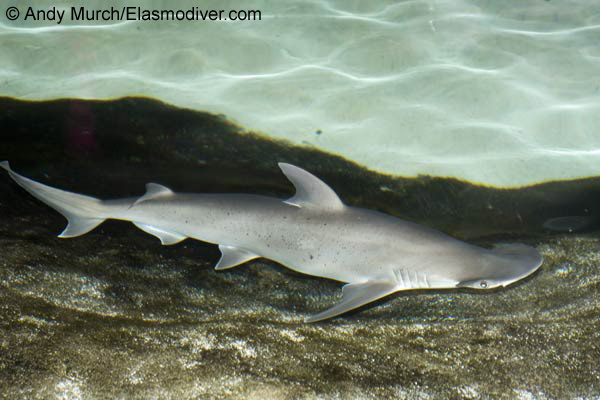
| Sphyrnidae (Hammerhead, bonnethead, or scoophead sharks) |
| 150 cm TL (male/unsexed); max.weight: 11 kg; max. reported age: 12 years |
|
reef-associated; brackish; marine; depth range 10 - 80 m, oceano-estuarine |
| Western Atlantic: North Carolina, U.S to Belize. Species complex with Sphyrna vespertina in the Eastern Pacific Ocean and Sphyrna alleni from Belize to Brazil, WA (Ref. 132488). |
|
Front of head semicircular in outline. No other hammerhead has front of head in semicircle. (Ref. 26938). |
| Found on the continental and insular shelves, on inshore and coastal areas, over mud and sand bottoms, also on coral reefs. Often occur in shallow water including estuaries, shallow bays and over coral reefs (Ref. 9987). Spends night time hours on shallow grass flats, searching for nocturnally active invertebrate prey, moves into deeper water during the day (Ref. 27549). Adults feed mainly on crustaceans, also on bivalves, octopi, and small fish. However, this is the first shark species to demonstrate omnivorous digestive strategy (Ref. 118574). It has been shown through digestability analyses that bonnetheads have enzymes that can digest seagrass organic matter with at least moderate efficiency (Ref. 118574). Viviparous, with 6 to 9 young per litter. Size at birth about 35 to 40 cm. Not territorial. Always occurs in small groups. Considerable sexual segregation occurs. Shows diel rhythm of activity. Utilized for human consumption and processed for fishmeal. |
|
Endangered (EN); Date assessed: 02 July 2019 (A2bcd) Ref. (130435)
|
| harmless |
Source and more info: www.fishbase.org. For personal, classroom, and other internal use only. Not for publication.