
|
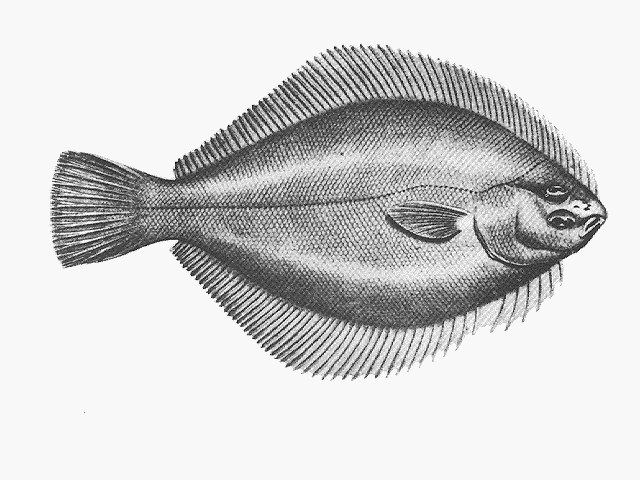
Rhombosolea tapirina Günther, 1862 Greenback flounder |
|
|
photo by
CSIRO |
| Family: | Rhombosoleidae (South Pacific flounders) | |||
| Max. size: | 45 cm TL (male/unsexed) | |||
| Environment: | demersal; brackish; marine; depth range 0 - 100 m, diadromous | |||
| Distribution: | Eastern Indian Ocean and Southwest Pacific: south coast of Australia; New Zealand (Ref. 5755). | |||
| Diagnosis: | Dorsal soft rays (total): 56-69; Anal soft rays: 40-50. Body deep (47-60% SL). Snout slightly extended into fleshy process projecting more or less in front of oblique mouth. Scales very small, rather firmly attached; cycloid on both sides, covering head except well anteriorly. Caudal fin rays 14 -17 (Ref. 33839). | |||
| Biology: | Adults are common on silty sand substrates from estuaries and inshore waters down to 100 m depth. Juveniles occasionally entering rivers. | |||
| IUCN Red List Status: | Not Evaluated (N.E.) Ref. (130435) | |||
| Threat to humans: | harmless | |||