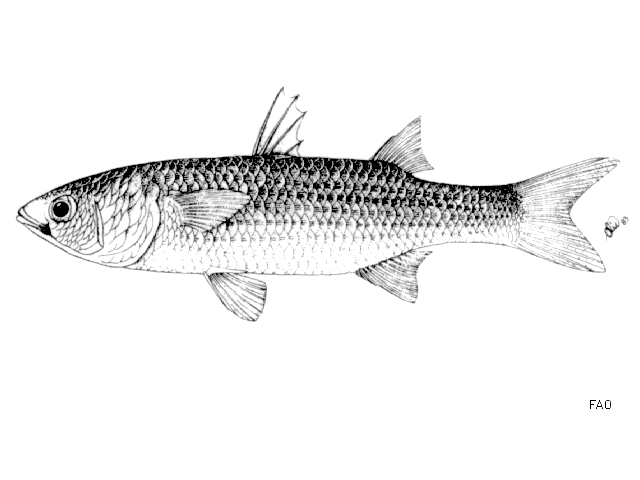
| Mugilidae (Mullets) |
|
|
pelagic-neritic; brackish; marine |
| Indian Ocean: Red Sea through the Suez Canal, a Lessepsian migrant species. |
|
Anal spines: 3-3; Anal soft rays: 9-9; Vertebrae: 24-24. This species is distinguished by the following characters: hind tip of maxilla exposed when mouth is closed; head ia relatively large, slightly convex, head length 26-30% of SL; adipose eyelid developed anteriorly and posteriorly; mid-dorsal line is sharply keeled; transverse scale 11-13 rows; scales in lateral series usually 34-38; pectoral-fin usually with 16 rays; pectoral-fin length 20-24% of SL, just reaching to the level of first dorsal-fin; supraneurals 3, the first between second and third vertebrae, the second between fourth and fifth vertebrae, and the third between fifth and sixth vertebrae; first pterygiophore of spinous dorsal fin between sixth and seventh vertebrae (Ref. 137907). |
| Dwells in coastal waters with various substrates as well as brackish waters and hypersaline lagoons. Feeds on small benthic invertebrates, planktonic organisms, algae and detritus, among other food items (Ref. 127989). Oviparous, eggs are pelagic and non-adhesive (Ref. 205). |
|
Not Evaluated (N.E.) Ref. (130435)
|
| harmless |
Source and more info: www.fishbase.org. For personal, classroom, and other internal use only. Not for publication.