|
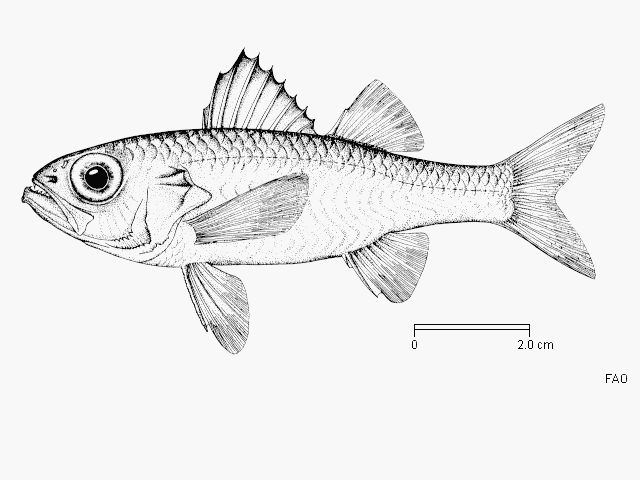
Parascombrops pellucidus Alcock, 1889 |
|
|
photo by
FAO |
| Family: | Synagropidae (Splitfin ocean-basses) | |||
| Max. size: | 9 cm SL (male/unsexed) | |||
| Environment: | bathydemersal; marine; depth range 179 - 210 m | |||
| Distribution: | Indian Ocean: from East Africa and the Red Sea to the Bay of Bengal. | |||
| Diagnosis: | Dorsal spines (total): 10-10; Dorsal soft rays (total): 9-9; Anal spines: 2-2; Anal soft rays: 7-7. This moderately slender-bodied species is distinguished by the following characters: slightly convex dorsal head profile; A II + 7; pectoral-fin rays 14-16, pectoral length 27.1-30.9% SL, reaching anterior edge of anal fin; gill rakers 19-25; pseudobranchial filaments 16-26; first anal-fin pterygiophore long and straight, slender with rather sharp tip and not hollow; palatines and ectopterygoids narrow, usually with 1 row (rarely 2) of denticles; orbital diameter 10.1-12.2% SL; posterior edge of maxillary plate straight; no longitudinal ridges on the preopercular lobe; otolith moderately elongate (OL:OH = 1.5-1.7) (Ref. 116586). | |||
| Biology: | Common on the deep shelf from 179 to 210 m. Sold fresh in markets. | |||
| IUCN Red List Status: | Not Evaluated (N.E.) Ref. (130435) | |||
| Threat to humans: | harmless | |||