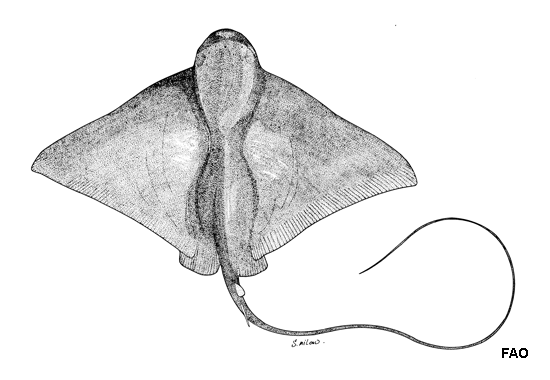
| Myliobatidae (Eagle and manta rays) |
| 48 cm WD (male/unsexed) |
|
benthopelagic; marine; depth range - 200 m |
| Indo-West Pacific: patchy distribution, Austalia, Indonesia, the Philippines, Taiwan and Japan. |
|
Vertebrae: 114-119. This medium-sized Myliobatis species (attaining at least 114.2 cm DW) is distinguished by the following set of characters: dorsal surface uniformly purplish brown to greenish brown, without dark spots or blotches; tail with a distinct, low ventral skin fold; stinging spine(s) are relatively long (longest spine 13.1-15.9% DW); adult males with interorbital space moderately concave; anterior margins of pectoral fin is straight to slightly convex; cranial fontanelle (visible in dorsal view without dissection) is relatively wide with slightly convex lateral margins; claspers of adult males 5.5-5.7% DW; predorsal length 63.6-68.6% DW; each jaw with 7 rows of teeth, with a broad median row flanked by three smaller rows on each side; pectoral-fin radials 85-92 (excluding rostral propterygial radials anterior of eyes); total vertebral centra (including synarcual) 114-119; males mature at about 65.0 cm DW (Ref. 132213). |
| Common inshore and offshore, demersal in intertidal habitats to depths of at least 220 m (Ref. 58048); also in coral reefs (Ref. 58534). Diet unknown, but presumably consists primarily of bivalves and other bottom-dwelling invertebrates. Caught occasionally by inshore, demersal longline fisheries. Utilized for its meat and cartilage (Ref. 58048). Ovoviviparous (Ref. 50449). |
|
Near Threatened (NT); Date assessed: 17 February 2015 Ref. (130435)
|
| harmless |
Source and more info: www.fishbase.org. For personal, classroom, and other internal use only. Not for publication.