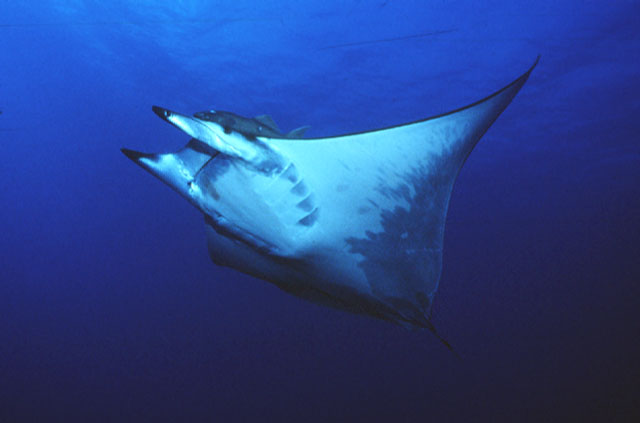
| Mobulidae (Devilrays) |
| 520 cm WD (male/unsexed); 240 cm WD (female); max.weight: 1,500 kg |
|
pelagic-neritic; marine; depth range 0 - 700 m, oceanodromous |
| Circumglobal. |
|
Larger than M. hypostoma, tail with spine and prickles (Ref. 6902). |
| An epipelagic species (Ref. 6808, 58302) found over continental shelves and near oceanic islands (Ref. 6679). Occurs singly or in groups (Ref. 9911). Feeds mainly on euphausiids (mainly Nictiphanes simplex), and to a lesser extent on copepods and crustacean larvae; also on small pelagic fishes and crustaceans (Ref. 6679, 6871), by funnelling using their cephalic fins and then trapping or filtering the food through their specialised gill plates (Ref. 115943). Acoustic tracks record the species to spend time above the thermocline at night to feed on krill (H. Dewar, pers.comm. 05/2000). Max length of female from Ref. 50641. Ovoviviparous (Ref. 50449). Bycatch mortalities have been reported from Mediterranean fisheries - large-scale driftnets, purse seines and trawls, bottom set nets, trammel nets, longlines and even fixed traps for tuna. Very common by-catch of the gillnet fisheries targeting skipjack tuna (Katsuwonus pelamis). It is utilized for its meat as protein source (except the head), its gill filter plates (of very high value and as an ingredient in Chinese medicine, Ref. 115943), its cartilage and skin (Ref. 58048). |
|
Critically Endangered (CR); Date assessed: 19 June 2025 (A2bd+3d) Ref. (130435)
|
| harmless |
Source and more info: www.fishbase.org. For personal, classroom, and other internal use only. Not for publication.